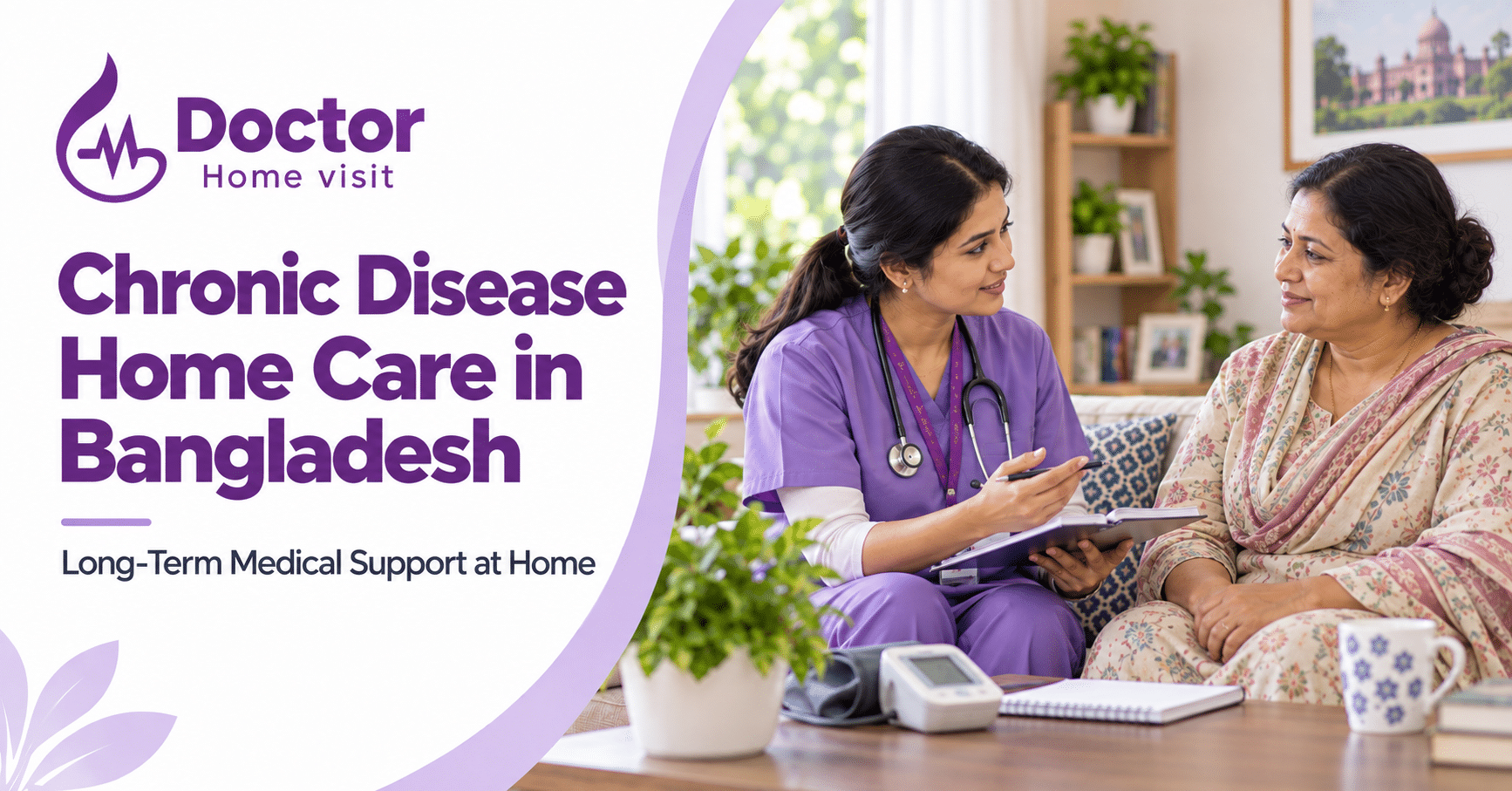
Living with a chronic disease is not like treating a simple fever or seasonal cold. It is a long journey. The patient may need regular medicine, routine checkup, lifestyle changes, diet control, doctor follow-up, nursing support, and constant family care. For many families, managing everything through frequent hospital or clinic visits becomes stressful. That is why Chronic Disease Home Care in Bangladesh is becoming an important healthcare solution.
Doctor Home Visit BD provides long-term medical home care, doctor consultation, home visit, nursing, medication guidance, caregiver support, and patient monitoring for people living with chronic illnesses. Whether the patient has diabetes, high blood pressure, heart disease, old age weakness, or long-term recovery needs, proper home care can make daily life safer, easier, and more comfortable.
What Is Chronic Disease Home Care?
Chronic disease home care means providing long-term healthcare support to patients who live with ongoing medical conditions. These conditions do not usually go away in a few days. They need continuous management, regular monitoring, and proper treatment planning.
This type of home care can include doctor follow-up visits, medicine management, blood pressure monitoring, diabetes care, nursing support, lifestyle guidance, caregiver service, physiotherapy, and emergency planning. The goal is to keep the patient stable and reduce unnecessary hospital visits.
Understanding Long-Term Healthcare Management
Long-term healthcare management means caring for a patient over weeks, months, or even years. A chronic patient may not need hospital admission every day, but they need regular attention. If care is ignored, small changes can become serious complications.
For example, a patient with diabetes may feel normal but still have high blood sugar. A person with high blood pressure may not feel symptoms until the pressure becomes dangerous. This is why regular checkup and doctor consultation are important.
Chronic care is like maintaining a car for a long road trip. You do not wait for the engine to fail. You check it regularly, change what needs changing, and fix small issues before they become big problems. The same idea applies to long-term health.
Importance of Continuous Patient Monitoring
Continuous patient monitoring helps families understand whether the patient’s condition is stable or getting worse. Monitoring may include blood pressure, blood sugar, pulse, oxygen level, weight, symptoms, medicine use, appetite, sleep, and daily activity level.
For elderly patients and people with chronic illnesses, monitoring is not optional. It is one of the most important parts of care. A sudden change in blood sugar, pressure, breathing, or weakness can signal a medical problem.
With Doctor Home Visit BD, families can arrange qualified doctors, nurses, and caregivers to support regular monitoring at home. This gives the patient better safety and gives the family more confidence.
Common Chronic Conditions Requiring Home Care
Many chronic diseases can be managed at home when the patient is stable and has proper medical guidance. Home care does not mean ignoring hospital care. It means managing daily health properly and going to the hospital when needed.
In Bangladesh, common chronic conditions include diabetes, high blood pressure, heart disease, stroke-related weakness, kidney disease, respiratory illness, arthritis, and old age complications. These patients often need regular medical consultation, medicine support, and family supervision.
Diabetes Management
Diabetes is one of the most common chronic diseases in Bangladesh. It needs daily care, not occasional attention. A diabetic patient may need blood sugar monitoring, medicine or insulin support, diet control, foot care, exercise guidance, and regular doctor follow-up.
Home care can help diabetic patients maintain a safer routine. A nurse or caregiver can help with sugar monitoring, medicine reminders, diet support, and warning sign observation. If the patient is elderly or weak, this support becomes even more important.
Poorly controlled diabetes can affect the heart, kidney, eyes, nerves, and wounds. That is why families should not wait until a complication appears. Regular home healthcare support can reduce risk and improve quality of life.
High Blood Pressure Care
High blood pressure is often called a silent problem because many patients do not feel symptoms. But uncontrolled blood pressure can increase the risk of stroke, heart disease, kidney damage, and other serious conditions.
Home care for high blood pressure includes regular pressure monitoring, medicine timing, salt control, lifestyle guidance, stress management, and doctor follow-up. Family members should keep a record of readings so the doctor can understand the pattern.
A general physician or specialist doctor may adjust medicine based on the patient’s condition. This should never be done randomly. Proper doctor consultation is important for safe blood pressure care.
Heart Disease Support
Heart disease patients often need careful long-term care. They may have chest discomfort, shortness of breath, swelling, weakness, irregular heartbeat, or fatigue. Some patients recover after a heart attack or heart procedure and need home monitoring.
Home care for heart disease may include medicine management, blood pressure monitoring, pulse check, diet guidance, fluid control, light activity guidance, and follow-up with a physician. If symptoms become serious, urgent hospital care is required.
Families should watch for warning signs such as severe chest pain, breathing difficulty, fainting, heavy sweating, sudden weakness, or blue lips. In these cases, do not wait for a routine home visit. Go directly to a hospital emergency department.
Long-Term Recovery Conditions
Some patients need long-term home care after stroke, surgery, injury, infection, ICU discharge, or major illness. They may not be fully sick anymore, but they are not fully independent either.
These patients may need skilled nursing, caregiver service, physiotherapy, medicine support, nutrition guidance, and regular doctor visit. Recovery can be slow, and without proper support, the patient may become weaker.
For stroke recovery, physiotherapy and daily mobility assistance are very important. For post-surgery recovery, wound care and follow-up checkup matter. For old age recovery, emotional support and safe daily care are also essential.
Services Included in Chronic Disease Home Care
Chronic disease home care includes different services based on the patient’s condition. Some patients need only doctor follow-up and medicine review. Others need nursing, caregiver support, physiotherapy, and regular monitoring.
Doctor Home Visit BD helps families arrange suitable care based on patient needs. The service can be planned for short-term support or long-term care.
Doctor Follow-Up Visits
Doctor follow-up visits are important for chronic disease patients. The doctor reviews symptoms, medicine response, reports, blood pressure, blood sugar, and overall health progress.
A follow-up visit may help prevent complications. If medicine is not working properly, the doctor can adjust the plan. If a report shows risk, the doctor can guide the next step.
Many families search for Doctor home service near me, Home doctor service in Dhaka, or Doctor home visit BD because they want follow-up care without taking the patient to a clinic every time.
Nursing Support
Nursing support is helpful for patients who need skilled care at home. This may include injection, wound dressing, catheter care, feeding support, vital sign monitoring, insulin support, and post-hospital care.
A trained nurse can also help families understand patient care instructions. This is especially useful when the patient has multiple medicines, physical weakness, or complicated health needs.
Skilled nursing at home reduces stress for the family. It also helps the patient receive safer care in a familiar environment.
Medication Management
Medication management is one of the most important parts of chronic care. Many patients take several medicines every day. Missing a dose, taking the wrong dose, or mixing medicine incorrectly can create serious problems.
Home care support helps patients take medicine on time. Caregivers or nurses can organize medicine schedules, remind the patient, and inform the family if side effects appear.
Patients should not stop or change medicine without medical advice. Always consult a doctor before making changes, especially for diabetes, blood pressure, heart disease, kidney disease, or chronic pain medicines.
Lifestyle Guidance
Lifestyle guidance helps patients manage chronic diseases better. This may include diet advice, sleep routine, physical activity, stress control, smoking avoidance, hydration, and daily monitoring habits.
For diabetes patients, food control matters. For high blood pressure patients, salt control matters. For heart disease patients, safe activity and medicine discipline matter. These small daily habits can protect long-term health.
Home care professionals can guide the patient and family in simple ways. The goal is not to make life harder. The goal is to make healthy choices easier.
Benefits of Managing Chronic Diseases at Home
Managing chronic disease at home can improve comfort, reduce stress, and support better daily monitoring. It also helps patients stay close to family while receiving regular medical support.
However, home care should be planned properly. The patient still needs doctor guidance, reports when needed, and hospital care during emergencies.
Better Daily Monitoring
Home care allows regular monitoring in the patient’s daily environment. This helps track real health patterns. For example, blood pressure at home may show different results than a one-time clinic reading.
Daily monitoring gives doctors better information. It also helps families notice early warning signs. If a patient’s sugar stays high for several days, or blood pressure keeps rising, the family can take action sooner.
This is one of the strongest benefits of chronic disease home care. It turns care from reactive to preventive.
Reduced Healthcare Stress
Frequent hospital visits can be stressful for patients and families. Traffic, waiting rooms, transport cost, and physical weakness can make every appointment feel heavy.
Home care reduces this pressure. The patient can receive support at home, and the family can manage care with less disruption. This is especially helpful in Dhaka, where travel time can be unpredictable.
For elderly patients, avoiding unnecessary travel also reduces fatigue and fall risk. Comfort is not a luxury in chronic care. It is part of better treatment.
Improved Patient Comfort
Patients often feel more relaxed at home. They can rest in their own bed, eat familiar food, and stay close to family members. This emotional comfort matters.
A comfortable patient is more likely to follow treatment, take medicine regularly, and communicate symptoms clearly. Home care creates a calmer space for long-term healing and stability.
For old age patients, assisted living support, caregiver service, and family involvement can make daily life safer and more dignified.
Role of Family and Caregivers in Chronic Care
Family and caregivers play a major role in chronic disease management. Doctors can guide treatment, but daily care often happens at home.
A patient’s family can help with medicine, diet, appointments, records, emotional support, and warning sign observation. A trained caregiver or patient care taker can make this easier when the family cannot manage everything alone.
Supporting Treatment Plans
Supporting the treatment plan means helping the patient follow doctor advice. This may include giving medicine on time, preparing suitable meals, encouraging light movement, checking blood pressure or sugar, and arranging follow-up visits.
Family support can decide whether chronic care succeeds or fails. A patient may forget medicine or ignore symptoms, but a caring family member can keep the routine on track.
Caregiver service can also help when the patient needs daily assistance with bathing, feeding, walking, toileting, or personal care.
Monitoring Health Changes
Families should watch for changes in symptoms, appetite, sleep, mood, breathing, pain, swelling, urination, blood pressure, and sugar levels. Small changes can be important.
For example, sudden confusion in an elderly patient may signal infection or sugar imbalance. Swelling in the feet may relate to heart or kidney problems. Unusual weakness may need medical consultation.
If any serious symptom appears, families should seek urgent care or hospital support. Home care is helpful, but emergencies need quick action.
Maintaining Patient Records
Maintaining patient records is very important. Keep prescriptions, test reports, hospital discharge papers, medicine lists, allergies, blood pressure records, sugar charts, and doctor notes in one file.
This helps doctors make better decisions during consultation. It also avoids repeated tests, medicine confusion, and missed information.
A well-maintained record is like a map of the patient’s health journey. Without it, every new consultation starts from zero.
Choosing Chronic Disease Home Care Services
Choosing the right chronic disease home care provider is important because long-term care needs trust, consistency, and professional support. Do not choose only based on price.
A good provider should understand chronic care, offer qualified professionals, communicate clearly, and guide families honestly.
Healthcare Professional Experience
Experience matters in chronic care. A provider should have access to qualified doctors, nurses, caregivers, and healthcare professionals who understand long-term patient needs.
A chronic patient may have more than one condition. For example, an elderly person may have diabetes, high blood pressure, kidney issues, and mobility problems together. This needs careful coordination.
Doctor Home Visit BD focuses on home-based healthcare support for patients who need ongoing medical guidance, follow-up, and monitoring.
Available Medical Support
Before choosing a service, check what support is available. Does the provider offer doctor visits, nursing, caregiver service, physiotherapy, online doctor consultation, emergency doctor support, and follow-up care?
Chronic disease patients may need different services at different times. A patient may need a doctor today, nursing tomorrow, and physiotherapy next week. A provider with multiple services can support the family better.
This is why many people search for Doctor home service near me or Home doctor service in Dhaka when they need complete home healthcare.
Emergency Backup Options
Emergency backup is important for chronic patients. Even stable patients can suddenly become unwell. Families should know what to do if symptoms worsen.
Ask the provider what happens during urgent situations. Can they arrange an emergency doctor? Can they guide hospital referral? Can they provide urgent nursing support?
For severe symptoms like chest pain, breathing difficulty, unconsciousness, stroke signs, heavy bleeding, or sudden collapse, go directly to the hospital. Do not wait for home care.
Conclusion
Chronic Disease Home Care in Bangladesh helps patients manage long-term health conditions with more comfort, consistency, and family support. It brings doctor follow-up, nursing, medication management, lifestyle guidance, caregiver service, and patient monitoring closer to home.
Doctor Home Visit BD supports families with reliable home healthcare services for chronic illness management. If your loved one is living with diabetes, high blood pressure, heart disease, old age weakness, or long-term recovery needs, proper home care can reduce stress, improve daily monitoring, and support a safer healthcare routine.
Frequently Asked Questions
Q1: Can chronic diseases be managed at home?
Yes, many chronic diseases can be managed at home when the patient is stable and follows proper medical advice. Conditions like diabetes, high blood pressure, heart disease follow-up, stroke recovery, and old age weakness often need home-based support.
However, serious symptoms or sudden complications may require hospital care. Home care should work together with doctor guidance, not replace necessary medical treatment.
Q2: What support do chronic patients need?
Chronic patients may need doctor follow-up, medicine management, regular checkup, blood pressure or sugar monitoring, nursing support, caregiver service, physiotherapy, diet guidance, and family supervision.
The exact support depends on the patient’s condition, age, mobility, and medical history.
Q3: Is nursing required for chronic care?
Nursing is not required for every chronic patient, but it is very helpful for patients who need injections, wound care, catheter support, insulin assistance, vital sign monitoring, or post-hospital care.
A doctor can help decide whether nursing support is needed. For elderly or bedridden patients, nursing may improve safety and comfort.
Q4: How much does chronic home care cost?
The cost depends on the type of service, patient condition, location, care duration, doctor visits, nursing hours, caregiver support, and physiotherapy needs.
For exact pricing, contact Doctor Home Visit BD and share the patient’s condition, location, and required services.
Q5: How can I arrange chronic patient care?
You can arrange chronic patient care by contacting Doctor Home Visit BD and explaining the patient’s disease, age, current condition, medicine list, mobility level, and care needs.
The team can guide you about doctor visits, nursing support, caregiver service, physiotherapy, and follow-up care options.
Q6: Can elderly patients receive chronic care at home?
Yes, elderly patients can receive chronic care at home. This is useful for diabetes, blood pressure, heart disease, weakness, joint pain, mobility problems, and old age care.
Home care helps elderly patients stay comfortable while receiving regular medical support.
Q7: Can online doctor consultation help chronic patients?
Yes, online doctor consultation can help with report review, medicine guidance, follow-up questions, and basic health advice.
But if the patient needs physical examination, a home visit doctor or clinic visit may be necessary.
Q8: When should a chronic patient go to the hospital?
A chronic patient should go to the hospital for severe chest pain, breathing difficulty, unconsciousness, stroke symptoms, high fever with danger signs, severe dehydration, heavy bleeding, or sudden serious weakness.
These symptoms need urgent medical care and should not be managed only at home.