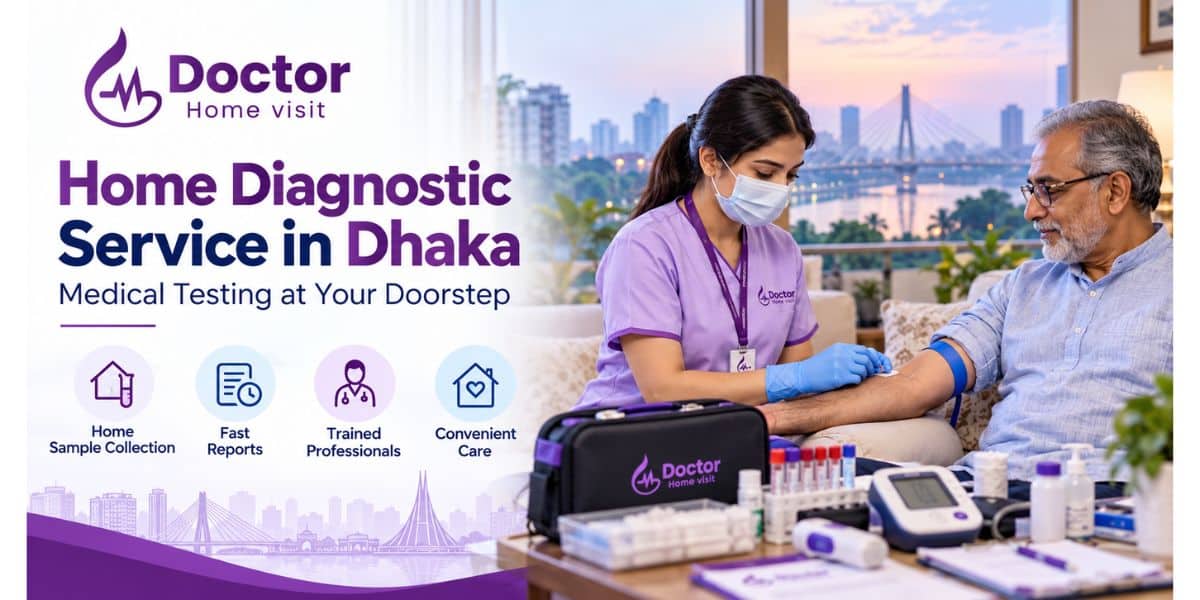

An online doctor consultation connects a patient with a physician through video, audio or a supported messaging service. You explain your symptoms, share relevant medical information and receive advice about the next step. Depending on the assessment, that step might involve treatment, tests, follow-up or an in-person examination.
If you are searching for Online Doctor BD, you probably want a clear answer without an unnecessary trip across town. Perhaps you need help understanding a report. Perhaps an elderly parent has a question about an existing care plan. This guide explains how online care works in Bangladesh, what to prepare and where its limits matter. Doctor Home Visit BD’s consultation service page holds the current doctor listings and appointment options.
What Is an Online Doctor Consultation?
An online doctor consultation is a medical consultation carried out remotely rather than in the same room. The physician gathers information, considers possible explanations and decides whether remote advice is sufficient. It is a clinical conversation with an identifiable professional, rather than an anonymous answer beneath a social media post.
Think of telemedicine as another doorway into healthcare. It changes how you meet the doctor, while the need for careful assessment remains. A useful consultation should leave you understanding what the doctor thinks, what remains uncertain and what you should do next.
Video, audio and chat consultations
A video consultation lets the doctor speak with you and observe visible features when the connection and lighting allow. Audio can make conversation possible where internet access is limited. Chat may help communicate questions or exchange documents, although written messages can leave important details unclear.
Ask which format the service actually provides. A messaging inbox may collect appointment requests without offering clinical chat consultations. Similarly, sending a report does not necessarily mean a physician has reviewed it. Confirm who will respond and whether the interaction is a scheduled doctor consultation.
What telemedicine can and cannot assess
Remote care can bring together your symptom history, previous treatment and available reports. However, the doctor cannot perform a conventional hands-on examination through an ordinary phone call. The BMDC’s telemedicine guidance recognises these examination limits and places the decision about suitability with the treating doctor.
That distinction matters when you want certainty. A clear camera image is still only part of the clinical picture. Your physician may provide advice while explaining that a clinic assessment is needed before reaching a firmer conclusion. Accepting that limitation can help you avoid misplaced reassurance.
When Online Medical Advice May Be Appropriate
Online medical advice may be suitable when the doctor can assess your concern adequately using conversation and relevant records. The same symptom can have different implications for different people. Your age, health history, current medicines and how quickly things are changing all affect the decision.
Consider the question you need answered. Understanding an existing treatment plan is different from assessing a new, rapidly worsening illness. Explain the problem honestly at the start, including anything that has changed since you requested the appointment. The clinician can then decide whether to continue remotely.
Routine concerns and follow-up
A general physician may use an online appointment to discuss a non-emergency concern, review progress after an earlier visit or clarify instructions. These are examples of possible uses, rather than a promise that every cough, headache or stomach complaint can be managed online.
Follow-up works best when the doctor can see the earlier plan. Tell them what improved, what stayed the same and whether anything new appeared. If you have not followed part of the plan, explain why. Difficulty obtaining medicine or understanding instructions is useful information, not something to hide.
For example, imagine that you leave a clinic with several instructions and later realise you cannot remember which question to ask at your next checkup. A remote discussion may help you organise those questions and clarify the existing plan. Bring the actual instructions, rather than relying on a relative’s recollection of what was said.
Now imagine the same patient develops a new problem before the appointment. That changes the conversation. Tell the service about the change instead of presenting it as a routine review. The most useful description is often simple: what was happening before, what is happening now and when the difference began.
Report review and chronic illness support
Report review can help you understand why a test was requested and how its findings relate to your health. A result outside the printed reference range does not explain the whole situation. The physician needs the report date, your symptoms and the clinical context before advising you.
For chronic illnesses, organise the records your treating doctor has asked you to keep. Share trends and practical difficulties instead of selecting only reassuring readings. Online support can fit into ongoing care, but it does not automatically replace scheduled examinations, investigations or specialist follow-up.
An older family member may also need help carrying out instructions between appointments. Identify who organises medicines, who keeps reports and who can accompany the patient if an examination is advised. A care plan is easier to follow when the family understands these responsibilities.
When You Need In-Person or Emergency Care
Some health problems need direct examination, urgent treatment or hospital facilities. An online conversation may help explain a referral, but it cannot deliver the monitoring, procedures or immediate treatment available in an emergency department. Choosing the right setting matters more than completing the original appointment.
Do not wait in a routine booking queue when someone appears seriously ill. Severe breathing difficulty, loss of consciousness, suspected stroke, severe bleeding, a seizure that is not stopping or a severe allergic reaction are examples of emergency warning signs. This is not an exhaustive list.
Limits of remote examination
An ordinary video call cannot replace listening to the chest with appropriate equipment, examining an injured joint or assessing abdominal tenderness. Even describing pain can be difficult. A clinician may need to examine you directly to understand findings that a camera cannot capture.
If the doctor recommends an in-person review, ask where to go and how urgently you need assessment. Clarify whether a clinic, a suitable home visit or a hospital is appropriate. Avoid assuming that a home appointment can provide every investigation or treatment available at a healthcare facility.
Getting appropriate urgent help
In Bangladesh, 999 is the national emergency service number listed by Bangladesh Police. For a suspected life-threatening emergency, call 999 for emergency assistance or seek immediate care at the nearest appropriate emergency department. Do not delay urgent help while uploading reports or waiting for a routine callback.
Give the responder your location and explain what is happening in plain language. Follow their instructions. Someone who is seriously unwell should not drive themselves. If another person is present, they can help communicate and gather available medical records without delaying access to care.
Search terms such as “emergency doctor” or “urgent care” can lead to very different services. Check what a provider actually offers. A standard online doctor consultation, even when available promptly, should never be treated as a replacement for emergency response or hospital treatment.
How to Choose an Online Doctor in Bangladesh
Choosing a doctor starts with identifying the person responsible for your care. A professional-looking banner, clinic advertisement or polished business profile cannot establish medical credentials. You need a name, relevant qualifications and registration details that can be checked independently.
Also look at how clearly the service explains the appointment. Can you establish which doctor you will see, what the consultation includes and how questions are handled afterwards? Clear information helps you make a considered choice before sharing private health details or paying.
BMDC registration and qualifications
The Bangladesh Medical and Dental Council provides an official registration verification service. Its search interface asks for a full registration number and doctor type. Request the physician’s registration details, use the official portal and compare the returned identity with the person named for your consultation.
Registration and specialist expertise answer different questions. Check that claimed qualifications match the work you need. If a profile uses abbreviations you do not understand, ask for an explanation. An incomplete search result or a mismatch should be clarified with the provider or BMDC rather than guessed away.
Questions to ask the responsible professional
Use this checklist when assessing a listed doctor:
- What is your full name and BMDC registration number?
- Which qualifications and experience relate to my concern?
- Will you personally conduct this appointment?
- Can this concern be assessed remotely?
- How will you explain a referral if I need examination?
You can ask these questions politely. A patient should understand who is providing medical advice. Keep the answers with your appointment information so you can recognise the responsible professional when the consultation begins.
Matching doctor expertise to your concern
A general physician may be a starting point for a broad, non-emergency concern. A patient already receiving specialist treatment may benefit from contacting that treating team. For children, ask about appropriate paediatric expertise rather than assuming every listed doctor provides the same age-specific care.
Match the clinician to the question you need answered. Understanding a discharge plan, reviewing an ongoing diabetes treatment plan and discussing rehabilitation are different tasks. Explain the purpose before choosing, especially if you are arranging the appointment for someone else.
Preparing for a Video or Audio Appointment
A little preparation gives the consultation a clearer starting point. You do not need to produce a perfect medical history. A short timeline, an accurate medicine list and readable reports are usually more useful than a long, unorganised message sent just before the call.
Write down the main question you want answered. If you have several concerns, put the most important one first and mention the others early. This lets the physician understand your priorities and explain what can reasonably be covered during the available appointment.
Symptoms, medicine list and reports
Note when the concern began, how it has changed and what you have already tried. Include medicines you actually take, including non-prescription products and supplements. Record known allergies and previous medicine reactions. If you are unsure of a name, have the packaging available rather than guessing.
For reports, gather complete pages and keep their dates visible. A photo of one highlighted number may leave out information the doctor needs. Ask the service how to send documents and whether there is a submission deadline. Avoid posting medical records in public comments.
Copy or share this appointment checklist without adding sensitive information:
- Main concern and symptom timeline prepared.
- Current medicines and known allergies listed.
- Relevant reports and previous prescriptions organised.
- Questions arranged in order of importance.
- Appointment time and consultation format confirmed.
- Device and connection checked.
- Private space and any needed support arranged.
Technology, privacy and consent
Test your camera, microphone and connection before the appointment. Charge your device and choose somewhere quiet with enough light. The US Department of Health and Human Services also recommends preparation steps such as checking technology and arranging a private location for telehealth visits.
Ask the provider who receives uploaded records, whether the consultation is recorded and how consent is obtained. Bangladesh’s National Telehealth Guideline addresses privacy, patient information and informed consent. These questions are especially useful when a family member helps with the technology or uses a shared device.
If you need an interpreter or help hearing the conversation, arrange this ahead of time. Tell the doctor who is present. Practical support should help the patient participate, while leaving room for them to speak privately when appropriate.
What Happens Before, During and After the Consultation?
A remote appointment usually moves through preparation, clinical discussion and a plan for what happens next. The details vary between providers. Treat the steps below as a guide to what to clarify, rather than a claim that every service follows an identical process.
Before the call, make sure you know how the appointment is confirmed and where the connection details will arrive. During the consultation, focus on explaining the concern clearly. Afterwards, check that you understand the advice and how to obtain any promised written information.
Booking and consultation
The service may ask for basic patient details, the main concern, relevant reports and a preferred time. Ask which information is needed at this stage and use the designated submission route. A request being received does not necessarily mean the doctor has accepted the appointment.
When the consultation begins, confirm that you are speaking with the expected physician. The doctor can then ask questions, review available information and discuss possible next steps. Describe what you have noticed in your own words. You do not need to choose a diagnosis before asking for help.
If the connection fails, use the support method agreed before the appointment. Explain whether the call never started, stopped midway or ended before the plan was clear. Ask whether reconnection, another suitable format or rescheduling is possible. An audio fallback is appropriate only if the clinician considers it sufficient.
Do not assume that a dropped call qualifies for an automatic refund or free replacement. Ask for the provider’s actual policy before paying. Keep the confirmation message so both sides can refer to the same arrangement if technical problems interrupt the consultation.
Written plan and follow-up
A useful written plan can summarise the advice, any investigations, medicine instructions where appropriate and the recommended review. Ask how it will be delivered. If a prescription is issued, check that the patient details are correct and clarify anything you cannot read or understand.
Before finishing, repeat the main actions back to the doctor. What should you do today? What changes require earlier assessment? When should you return? Ask whether follow-up is included or separately charged. Clear answers help prevent a completed call from becoming an unfinished care plan.
If the advice feels difficult to carry out, say so while you are still speaking. You might need a clearer explanation, help locating the correct report or time to arrange an examination. Raising practical barriers gives the doctor a chance to explain priorities and helps you leave with instructions you understand.
Online Doctor Fees and Free-Help Options
An online consultation fee pays for a defined professional service. Its value depends partly on what is included, such as consultation time, report review and any agreed follow-up. Compare those details alongside the amount, rather than choosing solely from an advertisement saying “low cost.”
Doctor Home Visit BD’s online consultation displays paid doctor appointments. This guide does not advertise free medical consultations from the company. If you need lower-cost support, check legitimate public resources separately and confirm their terms instead of assuming private consultation charges are waived.
Paid consultation charges
Ask for the total fee before confirming. Check whether the amount covers the selected physician, the consultation format and any later discussion of requested reports. Find out whether an additional appointment is charged separately. A broad promise of “follow-up support” needs a practical explanation.
Also ask about cancellation, rescheduling and situations where the doctor recommends examination after an initial discussion. Keep the payment receipt and written fee confirmation. Prices can change, so this article leaves current rates on the service page rather than presenting an undated amount as a lasting quote.
Checking legitimate free services
Searches for “Free online doctor help in Bangladesh” or “Is there a free online doctor consultation?” often mix educational information, limited offers and paid services. Check the organisation, clinician involvement, eligibility, dates and any phone or platform charges before relying on a free-care claim.
DGHS identifies Shasthya Batayan 16263 as a government health advice resource. Its published information includes call charges, so it should not be described as automatically free. Check the official service information and your mobile operator’s current charges before calling. It is separate from Doctor Home Visit BD.
If a charitable programme advertises free appointments, verify the offer through that organisation’s official contact details. Ask whether it covers a physician consultation, general information or appointment assistance. Keep expectations specific so that a helpful resource does not turn into an unexpected expense.
24-Hour Access and Practical Availability
An online form can accept requests at any hour without a physician being available immediately. That distinction is easy to miss when you are worried about someone at night. A working chat button or automatic reply confirms that a system received your message, not that clinical care has started.
For Online Doctor BD enquiries, confirm the actual appointment time and responsible clinician. Do not infer overnight access from general website wording. This guide makes no guarantee of round-the-clock doctor availability through Doctor Home Visit BD; the team must confirm the relevant schedule.
Booking support versus clinician availability
Booking support handles administrative questions such as appointment requests and payment information. A clinician assesses health concerns and makes medical decisions. Ask which kind of help is available when you contact the service, particularly outside ordinary appointment hours.
If you need advice sooner than the available appointment, explain that clearly and ask where to obtain appropriate assessment. For a serious or worsening condition, do not keep refreshing a booking inbox. Use the urgency of the health problem to guide your next action.
Items to confirm in writing
Before relying on an evening or overnight appointment, confirm:
- The named doctor and confirmed start time.
- Whether the time uses Bangladesh Standard Time.
- The consultation format and connection instructions.
- The support route if the call does not connect.
- The delay, cancellation and rescheduling arrangements.
Save the confirmation somewhere easy to find. If the appointment is for a relative, share the practical details with the person helping them. Avoid spreading their private reports through a family group simply to coordinate the call.
Scheduling across Bangladesh
Remote appointments can reduce the need to travel for a conversation, but ask whether the service accepts patients in your location. Tell the provider where the patient will physically be during the call. Location matters if the physician recommends local examination, testing or urgent care.
Plan around likely power and connection interruptions. A charged phone and an agreed backup contact can help, although they cannot guarantee a completed consultation. If a relative joins from abroad, state the appointment time in Bangladesh Standard Time to prevent confusion.
Online Consultation Versus Doctor Home Visit
Online consultation and a doctor home visit can serve different needs. A remote appointment centres on conversation and available records. A home visit allows a physician to examine the patient in person, within the equipment and service scope available for that visit.
Neither route provides every hospital facility. The practical question is what assessment the patient needs now. The comparison below can help you discuss the options with a clinician, rather than choosing entirely on convenience or a familiar search phrase.
Remote review versus physical examination
| Consideration | Online consultation | Doctor home visit |
| Contact | Supported video, audio or messaging format | Physician attends the patient’s location |
| Examination | Limited by distance and available information | Hands-on examination within the visit’s scope |
| Possible purpose | Suitable discussion, report review or follow-up | Suitable assessment requiring direct examination |
| Preparation | Connection, records and private space | Records, location details and access arrangements |
| Availability | Depends on the clinician’s schedule | Also depends on location and travel arrangements |
| Serious emergency | Seek emergency assistance | Seek emergency assistance rather than waiting for a routine visit |
A patient searching “Doctor home service near me” may need someone to examine an elderly relative. Another patient may only need an explanation of an existing report. These needs should not be treated as interchangeable simply because both can begin with a phone enquiry.
For location and appointment information, visit the home doctor service in Dhaka. Ask about the proposed examination, available equipment and doctor home visit charges. Confirm what happens if the physician recommends hospital assessment after the visit.
Choosing the appropriate route
Care at home can involve several professionals. A doctor assesses medical concerns; nursing and skilled nursing services provide care within their professional scope; a caregiver service may help with daily activities. Assisted living or elder care support does not replace medical assessment when a person becomes unwell.
For rehabilitation questions, read Physiotherapy in Bangladesh: A Guide to Treatment at Home in Dhaka. It is a separate guide to physiotherapy and home treatment, rather than a substitute for a physician’s assessment of unexplained symptoms.
Families can also explore baby care service in Bangladesh for infant support and ICU patient care at home in Bangladesh for complex care planning. These resources address different needs. Reading them does not establish that home care is suitable for a particular patient.
Booking an Online Doctor with Doctor Home Visit BD
Once you understand what online care can offer, use the online doctor consultation in Bangladesh service to review the current appointment options. Keeping doctor profiles there makes it easier to check the information that can change, including fees and availability.
This article explains the process; the service page is the place to select a listed doctor and begin an appointment enquiry. If you are uncertain whether remote review suits the concern, explain the symptoms before confirming. Administrative staff can help arrange contact, while clinical suitability requires professional judgment.
Choosing a listed doctor
Read the doctor’s listed qualifications and stated areas of practice. Then check their identity and registration through the official BMDC route. Choose according to the patient’s age, existing treatment and main concern, rather than relying on profile photographs or promotional wording.
Ask whether your selected physician is available at the requested time. A profile remaining visible does not establish a live appointment slot. Confirm whether the call will be by video or audio and whether another person can help the patient connect or communicate.
Reports, fee confirmation and follow-up
Send relevant reports through the route the team confirms. Check that they are readable and belong to the correct patient. Ask whether the doctor can access them before the call, and keep copies available during the consultation in case a document needs clarification.
Before paying, obtain the consultation fee and follow-up terms in writing. Confirm the policy for failed connections and any rescheduling request. After the consultation, retain the written plan and clarify how further questions should be raised. These arrangements should come from the provider, not assumptions based on this guide.
Prepare for a Useful Medical Consultation
Online Doctor BD services can make a medical conversation easier to arrange when remote assessment is appropriate. Their usefulness depends on an identifiable physician, relevant information and a clear understanding of what can be assessed through the chosen format.
Prepare your questions and records, confirm the terms and stay open to an in-person review. A useful consultation gives you a practical next step, even when further examination is needed.
Confirming the next step
Before the call ends, confirm what happens next and when. Ask which changes require earlier medical attention.
For a suitable non-emergency concern, Doctor Home Visit BD’s online consultation and request a confirmed appointment.
Retaining the care plan
Keep your consultation summary, reports and any prescription together. Bring them to later appointments.
Share the necessary instructions with anyone helping you follow the plan. Clear records make continuing care easier to coordinate.
Frequently Asked Questions
Q1: Can I get a prescription?
A prescription may be issued when the physician considers it clinically appropriate and consistent with applicable prescribing requirements. It is not a guaranteed outcome of paying for an appointment. The doctor may instead recommend examination, further information or another form of assessment.
If medicine is prescribed, ask about the instructions, intended purpose and recommended review. Explain what you already take so the doctor can consider the full picture. Do not assume that an online appointment can provide any particular medicine or automatically renew an earlier prescription.
Q2: Can I share reports?
Ask Doctor Home Visit BD which submission method is currently supported and when documents should arrive. Share complete, readable reports with visible dates. Include the reason for the test if you know it, plus any previous advice that helps explain the context.
Confirm that the documents reached the intended service. Sending a file does not itself establish that a doctor has reviewed it. During the consultation, ask how the report affects the next step rather than requesting an explanation of isolated numbers without your medical history.
Q3: Is consultation free?
Doctor Home Visit BD’s online service page lists paid appointments. Confirm your selected doctor’s current fee and what it includes before payment. A free appointment enquiry or an answer to an administrative question should not be interpreted as a free physician consultation.
If cost is a concern, explore legitimate public or charitable resources separately. DGHS publishes information about Shasthya Batayan 16263, but call charges may apply. Verify current terms directly. This article does not promise free treatment, prescriptions or follow-up from any provider.
Q4: Is a doctor available overnight?
Ask for a confirmed appointment time. Overnight message collection, an automated response and a doctor being ready to consult are different things. This guide does not establish a continuous overnight clinician roster for Doctor Home Visit BD or guarantee an immediate response.
If the available time is later than you need, seek an appropriate alternative based on the concern. Serious symptoms require urgent assessment, not a routine overnight booking request. Explain any deterioration to the medical professional you contact rather than assuming an earlier description still applies.
Q5: Can a family member join?
Ask the service about its arrangements and tell the doctor who will be present. With the patient’s agreement, a relative may help organise information, operate the device or take notes. The patient should still have an opportunity to describe their own concern where possible.
For children or an adult who needs additional support, clarify the appropriate guardian or representative arrangements beforehand. If the discussion includes sensitive information, ask whether part of the consultation can happen privately. Helpful involvement should respect the patient’s preferences and the clinician’s assessment needs.
Q6: What if the call fails?
Use the support contact confirmed before the appointment and explain what happened. Ask whether the doctor can reconnect, whether another format is suitable or whether the appointment needs rescheduling. A technical interruption should not leave you guessing about an unfinished instruction.
Refunds, replacement calls and additional charges depend on the provider’s confirmed terms. Keep your receipt and confirmation message. If the patient becomes seriously unwell while the issue is being resolved, seek appropriate urgent care instead of waiting for the connection problem to be fixed.
Q7: How do I check registration?
Request the doctor’s full name and BMDC registration number, then use the official BMDC verification portal. Compare the identity returned with the doctor named for your appointment. Ask the provider or BMDC to clarify any mismatch or uncertainty.
Do not rely entirely on a screenshot, visiting card or social media biography. Registration checking helps establish professional identity; you should also ask whether the doctor’s relevant qualifications and experience match the concern you want assessed. Both questions matter when choosing medical care.
Q8: When should I visit a hospital?
Seek immediate emergency help for potentially life-threatening symptoms, including severe breathing difficulty, suspected stroke, unconsciousness, severe bleeding or a seizure that is not stopping. Call Bangladesh’s emergency service on 999 or seek immediate emergency department care. Do not wait for an online appointment.
You may also need hospital assessment when a clinician recommends investigations, monitoring or treatment unavailable at home. Ask how urgently to attend and what records to bring. An earlier online consultation does not remove the need for reassessment if your condition changes or worsens.