
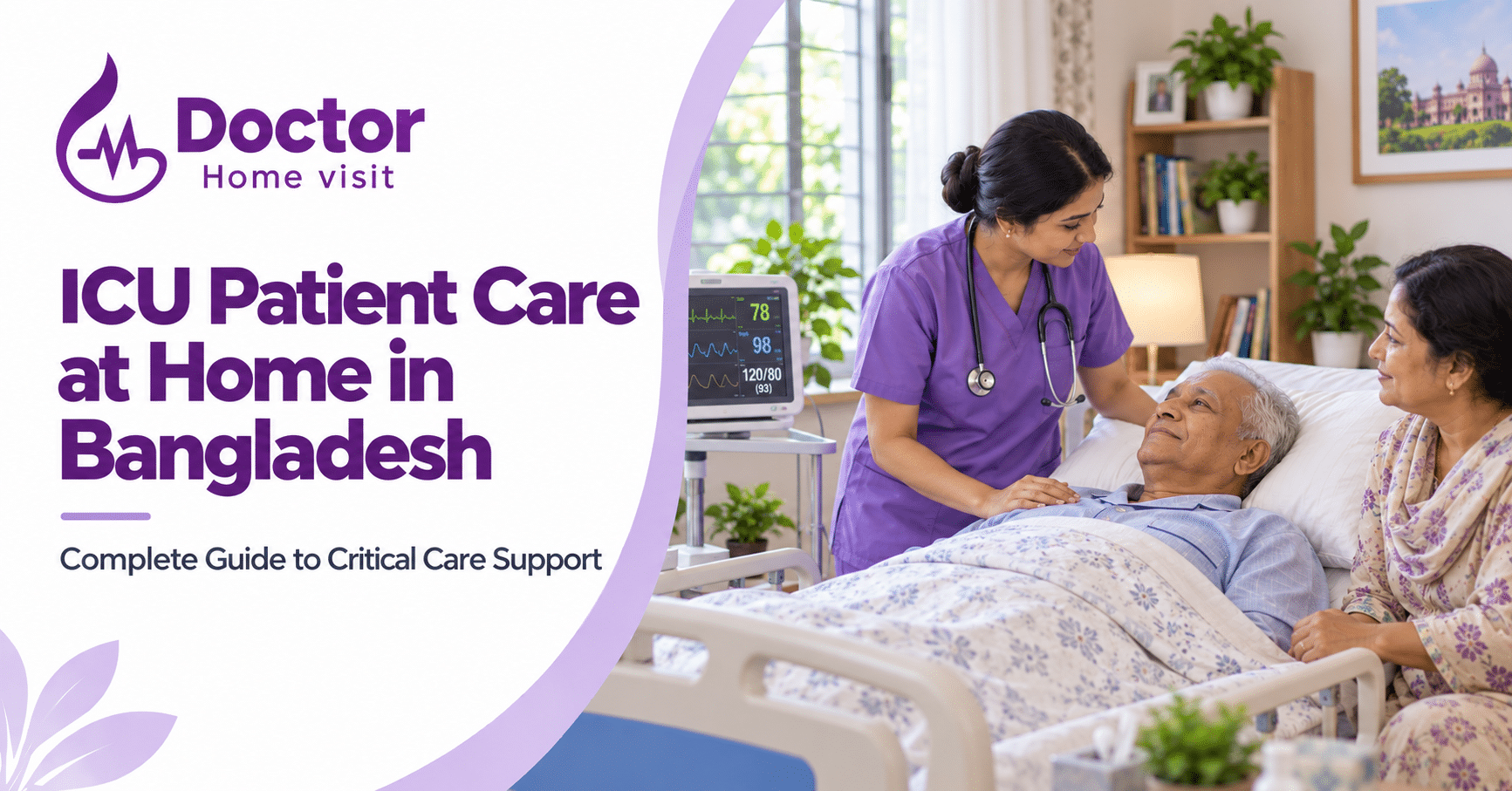
When a loved one comes out of the hospital ICU, the family often feels two emotions at the same time: relief and fear. Relief because the patient is finally stable enough to leave the hospital. Fear because the patient may still need oxygen support, continuous monitoring, medicine management, skilled nursing, hygiene care, and regular doctor consultation. This is where ICU Patient Care at Home becomes important.
In Bangladesh, many families are now looking for safer and more comfortable medical home care options for critical patients, especially in Dhaka. Doctor Home Visit BD helps families arrange home-based patient support, nursing care, doctor follow-up, medical monitoring guidance, and long-term care planning for patients who need close attention after ICU or serious illness. Home ICU care is not the same as a hospital ICU, but when planned properly, it can support recovery, comfort, and family involvement.
What Is ICU Patient Care at Home?
ICU Patient Care at Home means providing critical care support for a patient in a home environment after hospital discharge or during long-term illness. It may include trained nursing, vital sign monitoring, oxygen support, medicine management, hygiene care, feeding support, patient positioning, and doctor follow-up.
This service is usually suitable for patients who are stable enough to stay outside a hospital but still need close medical observation. The goal is to continue proper healthcare support at home while reducing unnecessary hospital stay and helping the patient recover in a familiar environment.
Understanding Home-Based Critical Care
Home-based critical care is designed for patients who need more than basic home care. A normal caregiver service may help with feeding, bathing, and movement, but ICU-level home care needs stronger medical attention. It often requires trained nurses, monitoring equipment, oxygen support, and regular communication with a physician or specialist doctor.
Think of it like building a mini support system around the patient. The home becomes the care space, the nurse becomes the daily observer, the doctor provides medical guidance, and the family becomes part of the recovery team. When all these parts work together, the patient gets safer and more organized care.
How ICU-Level Support Can Be Provided at Home
ICU-level support at home can be provided through a combination of trained healthcare professionals, medical devices, doctor supervision, and emergency planning. The patient may need monitoring of blood pressure, pulse, oxygen saturation, temperature, breathing pattern, urine output, and overall consciousness level.
In some cases, the patient may need oxygen concentrator support, suction machine, nebulization, feeding assistance, catheter care, bed sore prevention, or physiotherapy. A qualified nurse can manage daily care and report health changes to the family and doctor.
Difference Between Hospital ICU and Home ICU Care
A hospital ICU has advanced machines, emergency doctors, ICU nurses, ventilators, lab support, immediate tests, and rapid emergency response. It is designed for unstable and critically ill patients who may need urgent life-saving treatment at any moment.
Home ICU care is different. It is suitable only when the patient is stable enough to be cared for at home with proper support. At home, advanced hospital facilities are not available, so emergency planning is very important. If the patient becomes unstable, the family must be ready to shift the patient to a hospital quickly.
Who Needs ICU Patient Care at Home?
Not every patient needs ICU care at home. This service is usually for patients who have serious health conditions but are stable enough to stay outside a hospital with professional care.
Many elderly patients, long-term critical care patients, stroke patients, post-ICU recovery patients, respiratory patients, and bedridden patients may need this type of support. The decision should always be based on doctor advice and the patient’s current condition.
Patients Recovering After Intensive Care
Patients who recently stayed in ICU may still be weak after discharge. They may need oxygen support, medicine monitoring, nursing care, feeding help, mobility assistance, and regular checkup.
After ICU discharge, the body often takes time to become strong again. The patient may not be able to sit, walk, eat, or breathe normally without support. Home ICU care helps manage this transition from hospital to home more safely.
Patients Requiring Continuous Monitoring
Some patients need continuous monitoring even after they leave the hospital. This may include patients with heart disease, respiratory illness, stroke complications, kidney problems, severe infection recovery, or old age weakness.
Monitoring helps detect early warning signs. If oxygen level drops, blood pressure changes, fever rises, breathing becomes difficult, or consciousness changes, the nurse and family can take quick action.
Long-Term Critical Care Patients
Some patients need long-term medical support because their condition does not improve quickly. These may include bedridden patients, neurological patients, elderly patients with multiple chronic illnesses, or patients recovering from major surgery or ICU admission.
Long-term critical care at home may include nursing, caregiver service, patient care taker support, physiotherapy, doctor follow-up, and equipment support. Proper planning is important because this care may continue for weeks or months.
Patients Needing Respiratory or Medical Support
Patients with breathing problems may need oxygen support, nebulization, suctioning, positioning, and regular respiratory monitoring. Some patients may have COPD, pneumonia recovery, post-COVID complications, stroke-related swallowing problems, or other respiratory conditions.
Respiratory patients need careful observation because breathing problems can worsen quickly. If breathing becomes severe, the patient must be taken to a hospital emergency department without delay.
Essential Requirements for Home ICU Care
Home ICU care should not be arranged casually. It needs planning, trained professionals, proper equipment, doctor guidance, and emergency preparation.
The home environment should also be made safe and clean. The patient’s bed, room ventilation, power backup, medicine storage, and caregiver access all matter.
Qualified Nursing Support
Qualified nursing support is the backbone of home ICU care. A trained nurse can monitor vital signs, give medicine on time, support feeding, manage hygiene, prevent bed sores, assist with oxygen equipment, and report changes.
For critical patients, an untrained person may miss important danger signs. That is why skilled nursing is much safer than depending only on general care.
Medical Monitoring Equipment
Medical monitoring equipment helps track the patient’s condition. Common devices may include blood pressure machine, pulse oximeter, thermometer, glucometer, oxygen concentrator, nebulizer, suction machine, and sometimes a patient monitor depending on need.
The required equipment depends on the patient’s condition. A doctor or healthcare provider can guide what is necessary and what is optional.
Doctor Supervision and Follow-Up
Doctor supervision is essential for ICU patient care at home. Nurses and caregivers can provide daily support, but treatment decisions should be guided by qualified doctors.
The doctor may review reports, adjust medicine, suggest tests, advise hospital referral, and provide follow-up care. In some cases, online doctor consultation or home visit doctor support may be needed.
Emergency Support Planning
Emergency planning is one of the most important parts of home ICU care. The family should know which hospital to go to, who to call, what transport to use, and which documents to carry.
Emergency signs may include severe breathing difficulty, unconsciousness, chest pain, sudden oxygen drop, high fever, seizure, heavy bleeding, or sudden weakness. In these cases, do not wait at home. Go to the hospital immediately.
Role of Nurses in Home ICU Patient Care
Nurses are central to home ICU patient care. They stay close to the patient, observe changes, and manage daily medical needs.
A good nurse does not only follow instructions. They also notice patterns, communicate with the family, maintain hygiene, and help the patient stay comfortable.
Monitoring Vital Signs
Vital signs include temperature, pulse, blood pressure, oxygen saturation, breathing rate, and sometimes blood sugar. These numbers tell a lot about the patient’s condition.
Regular monitoring helps detect problems early. For example, low oxygen may signal breathing trouble, high fever may suggest infection, and low blood pressure may indicate serious weakness or dehydration.
Medication Management
ICU patients often take multiple medicines. Some medicines must be taken at exact times, and some require careful observation for side effects.
A nurse helps ensure medicine is given correctly. This reduces the risk of missed doses, wrong timing, or confusion. For patients with chronic illnesses, this support is very important.
Patient Hygiene and Comfort Care
Hygiene care includes bathing support, mouth care, skin care, changing clothes, cleaning the bed area, catheter care, and preventing bed sores. Critical patients often cannot manage these tasks alone.
Comfort care is equally important. A patient who stays in bed for long hours may feel pain, anxiety, stiffness, or loneliness. Proper positioning, gentle movement, and emotional support can improve comfort.
Reporting Health Changes
A nurse must report any health changes quickly. This may include fever, low oxygen level, breathing changes, swelling, wound problems, urine changes, confusion, or sudden weakness.
Early reporting helps the doctor guide treatment faster. It also helps the family avoid dangerous delays.
Medical Equipment Required for ICU Care at Home
Home ICU care usually needs some medical equipment. The exact list depends on the patient’s condition, doctor advice, and level of care required.
Families should not buy or rent equipment blindly. First understand what the patient actually needs.
Patient Monitoring Devices
Patient monitoring devices may include a blood pressure machine, pulse oximeter, thermometer, glucometer, and sometimes a multiparameter monitor. These devices help track patient stability.
For chronic patients, keeping daily records is very useful. It helps doctors review trends instead of relying on one-time readings.
Oxygen Support Equipment
Many ICU recovery patients need oxygen support at home. Oxygen equipment may include oxygen cylinder, oxygen concentrator, nasal cannula, mask, nebulizer, and sometimes suction support.
Oxygen should be used carefully based on medical advice. Too little oxygen is risky, and careless use can also create problems. The family and nurse should understand how to use equipment safely.
Mobility and Safety Equipment
Mobility and safety equipment may include hospital bed, air mattress, wheelchair, walker, bedside commode, bed rail, and patient lifting support. These tools help prevent falls and bed sores.
For elderly or bedridden patients, an air mattress and proper positioning can make a big difference. Small safety changes at home can prevent major problems.
Equipment Maintenance and Safety
Medical equipment must be kept clean and functional. Oxygen devices, suction machines, nebulizers, and monitoring tools should be checked regularly.
Power backup is also important, especially if the patient depends on oxygen concentrator or electric equipment. Families should discuss backup options before starting home ICU care.
Benefits of ICU Care at Home
Home ICU care can offer comfort, privacy, emotional support, and more personal attention. For stable patients, it may reduce hospital stress and support better family involvement.
Still, home care should be chosen carefully. Patient safety comes first.
Comfortable Environment for Patients
Patients often feel calmer at home than in a hospital. They can stay near family, sleep in a familiar room, and avoid the noise of a hospital ward.
Comfort matters in recovery. A peaceful environment can improve sleep, reduce fear, and help the patient feel emotionally stronger.
Reduced Hospital Stay
If the patient is stable, home ICU care may reduce long hospital stay. This can lower hospital-related stress and reduce exposure to hospital infections.
However, discharge should only happen when the doctor says the patient is safe for home care. Home care should never replace necessary hospital treatment.
Family Presence and Emotional Support
Family support is powerful. Critical patients often feel more secure when loved ones are nearby. This emotional support can improve mood and cooperation.
Family members can also understand the patient’s routine, communicate with nurses, and help make care decisions. This creates a stronger support system.
Personalized Patient Attention
At home, care can be more focused on one patient. The nurse and caregiver understand the patient’s habits, comfort needs, medicine schedule, and daily changes.
This personal attention is helpful for elderly patients, long-term critical patients, and patients with complex care needs.
Challenges of Managing ICU Patients at Home
Home ICU care has benefits, but it also has challenges. Families should understand these challenges before arranging care.
Critical care at home needs discipline, cleanliness, medical knowledge, quick decision-making, and professional support.
Need for Skilled Healthcare Professionals
A critical patient should not be managed by untrained people alone. Skilled nurses, doctors, and trained caregivers are important for safe care.
If the patient needs suction, oxygen support, catheter care, wound care, feeding support, or frequent monitoring, professional experience becomes even more important.
Emergency Response Preparation
The biggest challenge of home ICU care is emergency response. At home, immediate ICU equipment and emergency hospital teams are not available.
That is why the family must prepare in advance. Keep ambulance contacts, hospital details, medical files, medicine list, and emergency numbers ready.
Maintaining Medical Standards
Maintaining medical standards at home can be difficult. Cleanliness, infection control, medicine timing, equipment safety, and patient positioning must be done properly.
A reliable healthcare provider can help the family maintain these standards. Regular supervision and clear instructions are very important.
How to Choose Home ICU Care Services
Choosing the right home ICU care service is a serious decision. You are trusting someone with the life and safety of your loved one.
Do not choose only by price. Check experience, training, response system, equipment support, and doctor supervision.
Check Nursing Experience
Always check whether the nurse has experience with critical patients. ICU recovery patients need more skilled care than general elderly care.
Ask whether the nurse can manage vital monitoring, oxygen support, medicine schedules, hygiene care, feeding support, and emergency warning signs.
Review Medical Support Availability
A good provider should offer more than just a nurse. Check whether doctor consultation, home visit, online medical consultation, physiotherapy, caregiver service, and emergency guidance are available.
Doctor Home Visit BD helps families arrange home-based medical support based on patient condition and care needs.
Understand Emergency Procedures
Before starting home ICU care, ask what should happen in an emergency. Who should be called? Which hospital should the patient go to? What signs mean danger?
If the provider cannot explain emergency procedures clearly, that is a warning sign. Critical care needs clear planning.
Evaluate Healthcare Provider Reliability
Reliability means clear communication, trained staff, proper scheduling, honest guidance, and patient-focused care. The provider should not promise unrealistic results.
Home ICU care is serious. A responsible provider will explain both the benefits and limitations of care at home.
Cost of ICU Patient Care at Home in Bangladesh
The cost of ICU patient care at home in Bangladesh depends on the patient’s condition, nursing hours, equipment needs, doctor follow-up, location, and duration of care.
A short-term ICU recovery plan may cost less than long-term 24-hour critical care. The family should discuss details before starting.
Factors Affecting Home ICU Care Cost
Several factors affect cost. These include nurse qualification, duty hours, patient complexity, required equipment, oxygen support, doctor visits, caregiver support, and emergency planning.
Location also matters. Home care in Dhaka may have different charges based on distance, availability, and travel time.
Nursing and Equipment Expenses
Nursing is usually one of the biggest costs in home ICU care. A patient may need 12-hour or 24-hour nursing depending on condition.
Equipment expenses may include oxygen concentrator, cylinder, suction machine, hospital bed, air mattress, monitor, nebulizer, wheelchair, and other support tools. Some equipment may be rented instead of purchased.
Long-Term Care Planning
Long-term care planning helps families manage expenses better. Instead of arranging services randomly, create a care plan based on patient needs.
A proper plan may include nursing schedule, doctor follow-up, equipment list, medicine budget, physiotherapy, caregiver service, and emergency backup. This makes care more organized and less stressful.
Conclusion
ICU Patient Care at Home can be a practical and compassionate option for stable critical patients who need ongoing medical support after hospital ICU care. With qualified nursing, monitoring equipment, doctor supervision, oxygen support, hygiene care, and emergency planning, families can manage recovery more safely at home.
Doctor Home Visit BD helps families in Bangladesh arrange home-based critical care support based on patient needs. If your loved one is recovering after ICU or needs long-term medical attention, a proper home ICU care plan can bring comfort, safety, and peace of mind while keeping emergency readiness in place.
Frequently Asked Questions
Q1: Can ICU patients receive care at home?
Yes, some ICU patients can receive care at home if they are stable and the doctor approves discharge or home-based care.
However, unstable or life-threatening cases must stay in a hospital ICU. Home ICU care is only suitable when proper nursing, equipment, monitoring, and emergency planning are available.
Q2: What services are required for home ICU care?
Home ICU care may require skilled nursing, vital sign monitoring, oxygen support, medicine management, hygiene care, feeding support, bed sore prevention, doctor follow-up, physiotherapy, and emergency planning.
The exact services depend on the patient’s medical condition.
Q3: Is home ICU care safe?
Home ICU care can be safe for stable patients when it is arranged properly with trained nurses, doctor supervision, medical equipment, and emergency backup.
It is not safe for unstable patients who need continuous hospital ICU support, ventilator care, or immediate emergency procedures.
Q4: How much does ICU care at home cost?
The cost depends on nursing hours, equipment, patient condition, location, doctor follow-up, and care duration.
For exact pricing, contact Doctor Home Visit BD and share the patient’s condition, hospital discharge summary, equipment needs, and location.
Q5: How can I arrange home ICU support?
You can arrange home ICU support by contacting Doctor Home Visit BD and sharing the patient’s condition, diagnosis, discharge advice, oxygen requirement, mobility level, and required nursing hours.
The team can guide you about nursing, equipment, doctor follow-up, and care planning.
Q6: Does home ICU care include oxygen support?
Oxygen support may be included if the patient needs it and proper equipment is arranged. This may involve an oxygen concentrator, oxygen cylinder, mask, or nasal cannula.
Oxygen use should follow medical advice and be monitored carefully.
Q7: Can elderly patients receive ICU care at home?
Yes, elderly patients can receive ICU-level support at home if they are stable and suitable for home care. They may need nursing, monitoring, oxygen support, caregiver service, and doctor follow-up.
Because elderly patients are high-risk, professional care is strongly recommended.
Q8: When should a home ICU patient go to the hospital?
A home ICU patient should go to the hospital if there is severe breathing difficulty, oxygen level drop, unconsciousness, severe chest pain, seizure, heavy bleeding, high fever with danger signs, or sudden worsening.
Do not delay hospital care in emergencies.