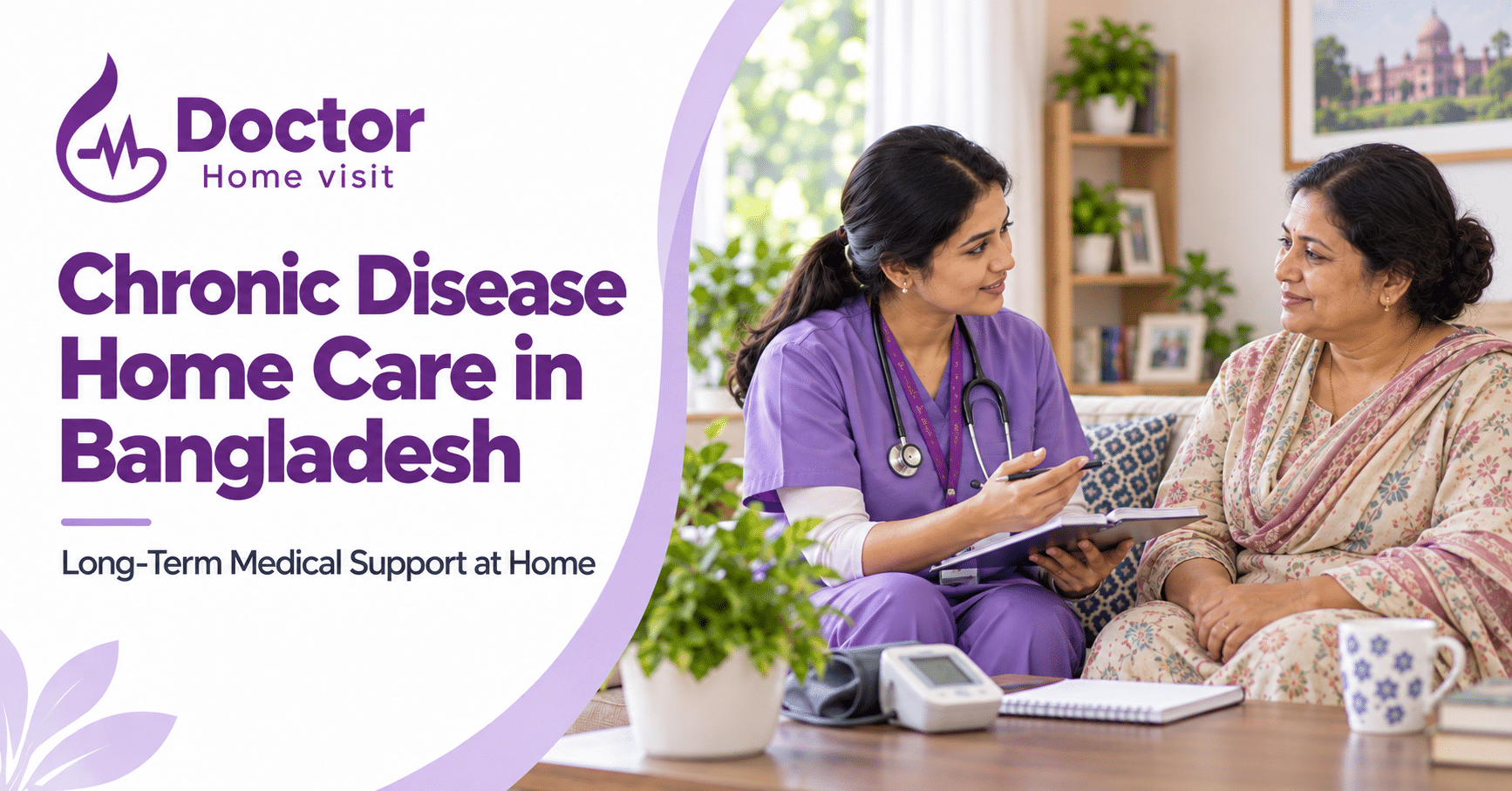
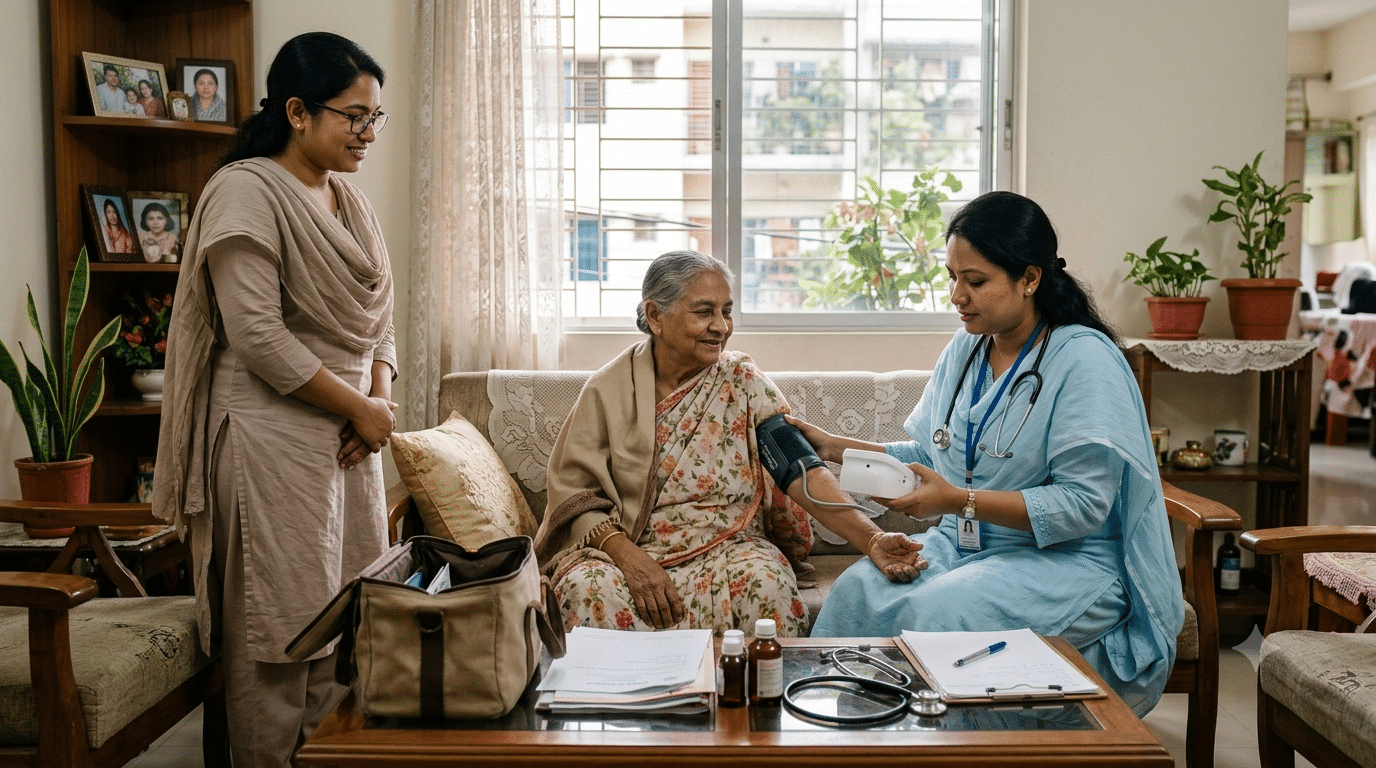
Chronic disease follow-up at home helps elderly patients in Dhaka manage conditions like diabetes, high blood pressure, heart disease, asthma, arthritis, kidney problems, and post-stroke weakness without the stress of frequent hospital visits. A qualified home visit doctor can check symptoms, review medicines, monitor vital signs, adjust care plans, and guide the family on when hospital care is needed.
For many elderly patients, regular follow-up is not optional — it is part of safe long-term care. If your parent or grandparent struggles with mobility, becomes tired after travel, or needs regular monitoring, a doctor home visit in Dhaka can make healthcare more comfortable, practical, and consistent.
What Is Chronic Disease Follow-Up at Home?
Chronic disease follow-up at home means a doctor visits the patient’s residence to monitor an ongoing medical condition. Unlike a one-time emergency visit, chronic care follow-up is usually planned and repeated based on the patient’s condition.
A home visit doctor may help with:
- Blood pressure monitoring
- Diabetes follow-up
- Medicine review
- Symptom assessment
- Diet and lifestyle advice
- Prescription renewal
- Caregiver guidance
- Early warning sign detection
- Referral to hospital or specialist when needed
For elderly patients, this type of care is especially valuable because small health changes can become serious quickly. A mild cough, swollen feet, low appetite, dizziness, confusion, or uncontrolled blood sugar may indicate something that needs medical attention.
Why Elderly Patients in Dhaka Need Home-Based Follow-Up
Dhaka is a busy city. Traffic, hospital waiting time, transport difficulty, heat, pollution, and crowded clinics can make regular follow-up hard for elderly people. Families in areas like Dhanmondi, Gulshan, Banani, Mirpur, Uttara, Mohammadpur, Bashundhara, Badda, Rampura, Khilgaon, Wari, Malibagh, and Motijheel often face the same problem: the patient needs care, but taking them to a hospital every time is difficult.
A doctor home visit near me search often happens when a family is worried and needs medical support quickly. But for chronic diseases, the best approach is not to wait until the patient becomes seriously ill. Regular follow-up helps prevent avoidable complications.
Real Local Example
A 72-year-old patient in Mirpur with diabetes and high blood pressure may look stable most days. But if the family notices leg swelling, tiredness, reduced appetite, or breathlessness, these signs should not be ignored. A home visit doctor can check blood pressure, pulse, oxygen level, blood sugar history, current medicines, and decide whether the patient can be managed at home or needs hospital evaluation.
Another common situation is an elderly parent in Dhanmondi who forgets medicines or takes the wrong dose. A private doctor home visit can help the family create a safer medication routine and reduce mistakes.
Common Chronic Diseases That Need Home Follow-Up
1. Diabetes
Diabetes follow-up is one of the most common reasons families request in home doctor visits. Elderly diabetic patients may have unstable blood sugar, poor appetite, weakness, foot wounds, frequent urination, dizziness, or infections.
A home visit doctor may:
- Review blood sugar records.
- Check symptoms of low or high sugar.
- Review food habits.
- Inspect feet if there is pain, numbness, or wounds.
- Adjust medicines when appropriate.
- Advise when urgent testing or hospital care is needed.
Family mistake to avoid: Do not change diabetes medicine randomly based only on one high or low reading. Elderly patients are more vulnerable to sudden sugar drops.
2. High Blood Pressure
High blood pressure often has no obvious symptoms, but it can lead to stroke, heart attack, kidney disease, or heart failure if poorly controlled.
A doctor on call home visit can check:
- Blood pressure trends
- Pulse rate
- Dizziness or headache
- Chest discomfort
- Medicine timing
- Salt intake
- Side effects from medication
Family mistake to avoid: Many patients stop blood pressure medicine when the reading becomes normal. This is risky. Normal readings often happen because the medicine is working.
3. Heart Disease
Elderly patients with heart disease need careful follow-up, especially if they have chest pain history, heart failure, irregular heartbeat, or previous heart attack.
Warning signs include:
- Shortness of breath
- Swollen feet
- Sudden weight gain
- Chest pain
- Unusual sweating
- Severe weakness
- Confusion
- Blue lips or low oxygen
A home doctor can provide first assessment, but chest pain, severe breathlessness, or signs of stroke should be treated as emergencies.
4. Stroke Recovery and Paralysis Care
After a stroke, many elderly patients need long-term follow-up at home. They may have weakness, difficulty walking, speech problems, swallowing difficulty, bed sores, constipation, urinary problems, or depression.
A home visit doctor can help monitor recovery, prevent complications, review medicines, and guide the caregiver on safe daily care.
Professional advice: If a stroke patient suddenly develops new weakness, facial drooping, speech difficulty, severe headache, or loss of consciousness, do not wait for a routine home visit. Seek emergency hospital care immediately.
5. Asthma, COPD, and Breathing Problems
Older patients with asthma or COPD may worsen during weather changes, dust exposure, air pollution, or respiratory infections. In Dhaka, dust, traffic pollution, construction work, and seasonal infections can increase breathing problems.
A home doctor may check:
- Breathing pattern
- Oxygen saturation
- Fever
- Cough severity
- Inhaler technique
- Need for urgent referral
Family mistake to avoid: Many patients use inhalers incorrectly. A doctor can demonstrate proper use and reduce avoidable breathing attacks.
6. Arthritis and Chronic Pain
Arthritis, knee pain, back pain, and joint stiffness are common among elderly patients. These conditions may not always be life-threatening, but they reduce mobility and independence.
Home-based follow-up can help with pain review, medicine safety, mobility advice, fall prevention, and referral for physiotherapy when needed.
7. Kidney Disease
Elderly patients with kidney problems need close monitoring because medicine doses, blood pressure, swelling, urine changes, and diet are important. Some painkillers and antibiotics can be harmful for kidney patients if used without medical advice.
Professional advice: Always tell the doctor if the patient has kidney disease before starting any new medicine.
Benefits of Doctor Home Visit BD for Elderly Chronic Care
Families searching for doctor home visit bd, home visit doctor, or home visit doctors near me usually want care that is fast, safe, and convenient. For elderly chronic disease patients, the benefits are more specific.
Comfort for the Patient
The patient stays in a familiar environment. This reduces stress, travel fatigue, waiting time, and exposure to crowded places.
Better Family Involvement
At home, the doctor can speak directly with caregivers and understand the real daily routine — food, sleep, medicines, mobility, bathroom access, and home safety.
More Accurate Lifestyle Advice
A clinic visit often gives only part of the picture. At home, the doctor may better understand why the patient is missing medicines, eating irregularly, falling often, or struggling with mobility.
Early Detection of Problems
Regular follow-up can identify red flags early, such as uncontrolled blood pressure, low oxygen, swelling, dehydration, infection, confusion, or medicine side effects.
Reduced Hospital Burden
Not every issue requires hospital admission. A home visit doctor can guide whether home care is enough or whether urgent hospital evaluation is needed.
What Happens During a Chronic Disease Home Visit?
A professional home visit usually follows a structured process.
Step 1: Patient History
The doctor asks about current symptoms, previous diagnosis, hospital history, medicines, allergies, reports, and recent changes.
Step 2: Vital Signs Check
Depending on the situation, the doctor may check:
- Blood pressure
- Pulse
- Temperature
- Oxygen saturation
- Breathing pattern
- Blood sugar record
- General weakness or dehydration signs
Step 3: Medicine Review
Many elderly patients take multiple medicines. The doctor checks whether medicines are being taken correctly, whether any medicine may be causing side effects, and whether the current routine is safe.
Step 4: Disease-Specific Assessment
For diabetes, the focus may be sugar control and foot care. For heart disease, breathing and swelling may be checked. For stroke recovery, mobility and swallowing may be reviewed.
Step 5: Care Plan
The doctor gives practical advice, prescription guidance, follow-up timing, warning signs, and referral instructions if needed.
Cost of Chronic Disease Follow-Up at Home in Dhaka
The cost of a home visit doctor in Dhaka can vary based on location, urgency, time of visit, doctor availability, patient condition, and whether additional support is needed.
Common factors that affect cost include:
- Regular visit vs urgent visit
- Daytime vs late-night service
- Distance within Dhaka
- Complexity of the patient’s condition
- Need for prescription review
- Need for repeat follow-up
- Additional nursing, lab test, or caregiver support if arranged separately
For elderly chronic disease follow-up, families should think beyond the one-time visit fee. The bigger value is preventing avoidable hospital trips, complications, medicine mistakes, and emergency situations.
If you are comparing private doctor home visit options, ask clearly:
- Is the doctor qualified and experienced?
- Is the service available in my area?
- Can the doctor manage elderly chronic conditions?
- Will I receive prescription guidance?
- What should I do if the patient worsens after the visit?
Prevention and Maintenance Tips for Elderly Chronic Disease Patients
Good chronic care is not only about calling a doctor when the patient becomes sick. Families can prevent many problems by maintaining a simple daily routine.
Daily Monitoring Tips
- Check blood pressure regularly if the patient has hypertension.
- Keep a blood sugar log if the patient has diabetes.
- Track oxygen level if the patient has breathing disease.
- Watch for swelling in feet or face.
- Monitor appetite, urine, stool, sleep, and mental alertness.
- Keep all medicines organized in a pill box.
- Maintain a file with prescriptions and reports.
- Do not stop medicine without medical advice.
- Keep emergency contact numbers ready.
Home Safety Tips
Elderly patients with chronic disease are at higher risk of falls. Make the home safer by:
- Removing loose rugs
- Keeping walking areas clear
- Using bathroom grab bars
- Keeping night lights on
- Avoiding slippery floors
- Using comfortable footwear
- Keeping medicines away from children
- Ensuring drinking water is nearby
Diet and Lifestyle Tips
For many chronic diseases, food and routine matter. Elderly patients should follow doctor-approved guidance for salt, sugar, fluid, protein, and activity level.
General tips include:
- Avoid excess salt for high blood pressure and heart disease.
- Avoid sugary drinks for diabetes.
- Eat small, regular meals if appetite is low.
- Stay hydrated unless fluid restriction is advised.
- Walk safely if the doctor allows it.
- Avoid smoking exposure.
- Keep vaccination and routine checkups updated.
Common Mistakes Families Make
Many chronic disease complications happen because of small mistakes repeated over time.
Mistake 1: Waiting Too Long
Families often wait until symptoms become severe. For elderly patients, early assessment is safer.
Mistake 2: Using Old Prescriptions
An old prescription may not be suitable for the current condition. Chronic diseases change over time.
Mistake 3: Ignoring Confusion
Sudden confusion in an elderly patient may be caused by infection, low sugar, dehydration, stroke, medicine side effects, or other serious problems.
Mistake 4: Overusing Painkillers
Painkillers can be risky for elderly patients with kidney disease, gastric problems, high blood pressure, or heart disease.
Mistake 5: Not Keeping Records
A doctor can make better decisions when the family keeps prescriptions, test reports, hospital discharge papers, and home monitoring records.
When to Call a Professional in Dhaka
Call a professional home visit doctor in Dhaka when an elderly patient has a known chronic disease and needs medical assessment but is stable enough to remain at home for initial evaluation.
You should consider calling a doctor if the patient has:
- Uncontrolled blood pressure
- Repeated high or low blood sugar
- Fever with weakness
- Cough or breathing discomfort
- New swelling in legs
- Poor appetite for several days
- Dizziness or repeated falls
- Confusion or unusual behavior
- Medicine side effects
- Chronic pain worsening
- Bed sore concern
- Post-hospital follow-up needs
However, call emergency medical services or go to the hospital immediately if there is severe chest pain, severe breathing difficulty, stroke symptoms, unconsciousness, severe bleeding, seizure, or very low oxygen.
GEO Service Area: Chronic Disease Home Follow-Up Near Dhaka Neighborhoods
Doctor home visit service is especially useful in Dhaka because travel can be difficult for elderly patients. Families often search for doctor home visit near me or home visit doctors near me when they need care in their own neighborhood.
We support patients across key Dhaka areas, including:
Central Dhaka
Patients in Shahbagh, Farmgate, Green Road, Panthapath, New Market, Kalabagan, and Eskaton can benefit from home-based follow-up when hospital travel is difficult.
Dhanmondi and Mohammadpur
Elderly patients in Dhanmondi, Mohammadpur, Shankar, Lalmatia, Jigatola, and nearby areas often need regular care for diabetes, hypertension, heart disease, and mobility problems.
Gulshan, Banani, Baridhara, and Bashundhara
Families in Gulshan, Banani, Baridhara, Niketon, Bashundhara R/A, and nearby areas often prefer private doctor home visit support for elderly family members who need convenient and professional medical attention.
Mirpur and Uttara
Mirpur, Pallabi, Kazipara, Shewrapara, DOHS, Uttara, Airport, and nearby locations have many elderly patients who may require regular chronic disease monitoring at home.
Badda, Rampura, Khilgaon, and Malibagh
Patients in Badda, Aftabnagar, Rampura, Banasree, Khilgaon, Malibagh, and Moghbazar may need doctor on call home visit support for chronic symptoms, fever, weakness, and medicine review.
Old Dhaka and Nearby Areas
Families in Wari, Sutrapur, Gendaria, Lalbagh, Chawkbazar, and nearby areas may benefit from home visit care when elderly patients cannot travel comfortably through traffic and crowded roads.
Why Choose Us for Chronic Disease Follow-Up at Home in Dhaka
Choosing the right home visit doctor matters, especially for elderly patients with chronic disease. The goal is not only to get a prescription, but to receive careful assessment, practical advice, and safe guidance.
1. Elderly-Focused Care
Elderly patients need patience, careful listening, and proper review of multiple conditions. A home visit allows the doctor to understand the full picture.
2. Convenient Doctor Home Visit in Dhaka
Instead of taking a weak or elderly patient through traffic, families can arrange care at home. This is helpful for patients with limited mobility, stroke recovery, chronic pain, or breathing problems.
3. Support for Common Chronic Conditions
Home follow-up can support diabetes, hypertension, heart disease, asthma, COPD, arthritis, kidney disease, post-stroke care, and general elderly weakness.
4. Clear Guidance for Families
Caregivers often feel confused about medicines, food, warning signs, and when to go to hospital. A home doctor can explain the next steps clearly.
5. Safer Decision-Making
A responsible doctor home visit helps families understand whether the patient can continue home care or needs urgent hospital evaluation.
Home Visit Doctor vs Clinic Visit: Which Is Better?
Both options have value. The right choice depends on the patient’s condition.
Home Visit Doctor Is Better When:
- The patient is elderly and weak.
- Travel is difficult.
- Follow-up is routine.
- Medicine review is needed.
- The patient needs observation at home.
- The family needs caregiver guidance.
Clinic or Hospital Is Better When:
- The patient needs advanced testing.
- There is severe chest pain.
- The patient has stroke symptoms.
- Oxygen is very low.
- There is severe infection or dehydration.
- Specialist procedures are needed.
A home visit doctor does not replace hospital care in emergencies. Instead, it helps with safe first assessment, routine follow-up, and practical chronic disease management.
Book a Home Visit Doctor in Dhaka
If your elderly parent or family member has diabetes, high blood pressure, heart disease, breathing problems, stroke recovery needs, chronic pain, or general weakness, regular follow-up at home can make care safer and easier.
Do not wait until symptoms become serious. Arrange a professional doctor home visit in Dhaka and get medical guidance in the comfort of your home.
10 FAQs
1. What is chronic disease follow-up at home?
Chronic disease follow-up at home means a doctor visits the patient’s residence to monitor long-term health conditions and guide ongoing care.
2. Who needs a home visit doctor in Dhaka?
Elderly patients with diabetes, high blood pressure, heart disease, stroke recovery, breathing problems, or mobility issues may need a home visit doctor in Dhaka.
3. Can a doctor check blood pressure and diabetes at home?
Yes, a home visit doctor can review blood pressure, blood sugar records, symptoms, medicines, and lifestyle habits at home.
4. Is doctor home visit safe for elderly patients?
Yes, doctor home visit can be safe and convenient for stable elderly patients, but emergency symptoms still require hospital care.
5. When should I call a doctor on call home visit?
You should call a doctor on call home visit when an elderly patient has worsening symptoms, medicine issues, weakness, fever, uncontrolled pressure, or blood sugar problems.
6. Do home visit doctors near me provide prescriptions?
Yes, a qualified home visit doctor can provide prescription guidance after assessing the patient’s condition.
7. Is home care better than taking an elderly patient to a clinic?
Home care is often better for routine follow-up and mobility problems, while clinics or hospitals are better for emergencies and advanced tests.
8. Which Dhaka areas are covered for doctor home visit?
Doctor home visit support may be available in areas such as Dhanmondi, Gulshan, Banani, Mirpur, Uttara, Mohammadpur, Bashundhara, Badda, Rampura, and nearby Dhaka neighborhoods.
9. How often should elderly chronic disease patients have follow-up?
Follow-up frequency depends on the condition, but many elderly patients need regular review every few weeks or months, or sooner if symptoms change.
10. How do I book a private doctor home visit in Dhaka?
You can book a private doctor home visit in Dhaka through the main home doctor service page and request support for elderly chronic disease follow-up.