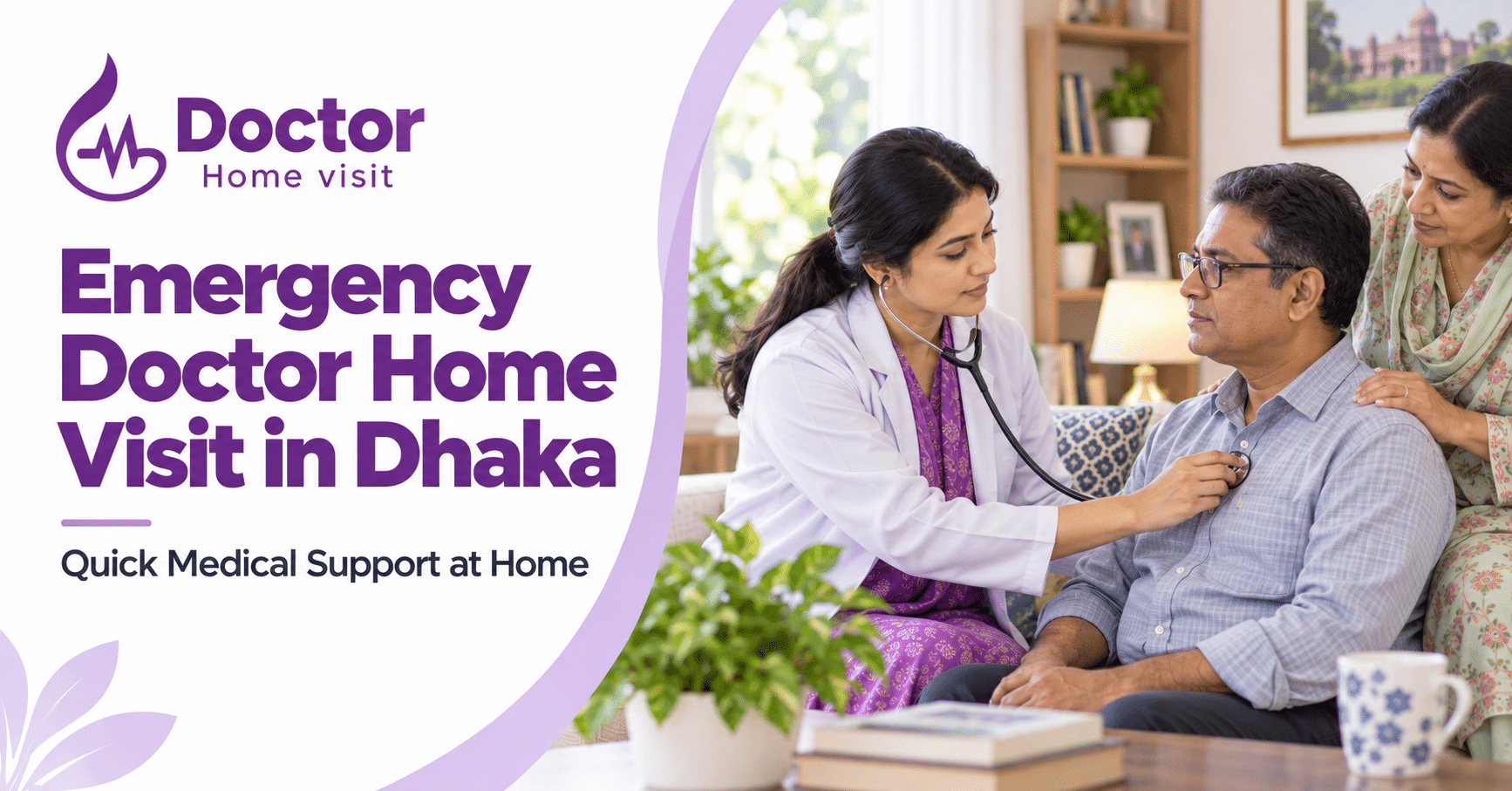
Medical problems do not always happen at a convenient time. A patient may suddenly develop high fever at night, an elderly person may feel weak and confused, or someone in the family may need urgent medical advice but cannot travel easily. In these moments, an Emergency Doctor Home Visit Service can give quick medical assessment and guidance at home.
Doctor Home Visit BD provides urgent doctor consultation, medical checkup, home visit, and healthcare support for patients in Dhaka when home-based medical attention is suitable. However, it is important to understand one thing clearly: a home emergency doctor is not a replacement for a hospital emergency department in serious or life-threatening conditions. The role of emergency home care is to assess the patient quickly, guide the family, start basic medical support when appropriate, and advise hospital referral when needed.
What Is an Emergency Doctor Home Visit Service?
An emergency doctor home visit service means a qualified doctor visits the patient’s home for urgent medical assessment. This may include checking symptoms, reviewing health history, checking vital signs, giving medical advice, suggesting medicine, and deciding whether the patient can be managed at home or needs hospital care.
In Dhaka, many families search for Doctor home service near me, Home doctor service in Dhaka, Doctor home visit BD, and Emergency doctor because they need fast support without waiting for a clinic appointment. This service is useful when the patient is weak, elderly, unable to move, or when the family needs immediate healthcare guidance.
Understanding Urgent Medical Support at Home
Urgent medical support at home means the doctor provides quick assessment for sudden illness or health changes. The doctor may check temperature, blood pressure, pulse, breathing, oxygen level, pain level, and general physical condition.
This service helps the family understand the seriousness of the situation. Sometimes the patient may only need medicine and monitoring. Other times, the doctor may advise urgent hospital admission. The goal is to make the next step clear.
When Patients Need Emergency Doctor Visits
Patients may need emergency doctor visits when there is sudden fever, weakness, vomiting, dehydration, breathing discomfort, dizziness, blood pressure changes, chest discomfort, elderly confusion, or sudden worsening of a known disease.
Emergency home visits are especially useful for elderly patients, children, chronic illness patients, and people with mobility problems. If the patient cannot travel easily, a home visit doctor can provide quick medical consultation and guide the family.
Difference Between Emergency and Regular Home Visits
A regular home visit is usually planned in advance. It may be for routine checkup, follow-up doctor consultation, chronic disease review, elderly care, or general medical advice.
An emergency home visit is urgent. It is requested when the patient’s health suddenly changes and the family needs fast medical support. The response time, urgency, and consultation focus are different from regular visits.
Situations Where Emergency Home Doctors Can Help
Emergency home doctors can help in many non-life-threatening urgent situations. They can assess the patient, provide medical guidance, and decide whether home care is enough or hospital care is required.
Still, families should not delay hospital treatment for serious symptoms. If the patient has severe chest pain, unconsciousness, severe breathing difficulty, stroke symptoms, heavy bleeding, or serious injury, go directly to a hospital emergency department.
Sudden Fever and Illness
Sudden fever can be worrying, especially for children, elderly patients, and people with chronic illnesses. Fever may come from viral infection, bacterial infection, dengue, flu, urinary infection, or other medical causes.
An emergency doctor home visit can help assess the patient’s temperature, hydration, weakness, pain, breathing, and general condition. The doctor may suggest medicine, tests, home care steps, or hospital referral depending on the symptoms.
Breathing Difficulty and Health Concerns
Breathing difficulty should always be taken seriously. Mild breathing discomfort may be managed with medical guidance, but severe breathing trouble needs urgent hospital care.
A home visit doctor can assess breathing pattern, oxygen level if equipment is available, chest symptoms, fever, cough, and patient history. If the doctor finds risk signs, the patient may be referred to a hospital immediately.
Elderly Patient Emergencies
Elderly patients can become unwell quickly. Old age, diabetes, high blood pressure, heart disease, kidney problems, respiratory disease, and weakness can make small symptoms more serious.
Emergency doctor home visits are helpful for elderly patients who suddenly feel weak, confused, dizzy, feverish, short of breath, or unable to eat or move properly. A doctor can assess the condition and guide the family about the next step.
Sudden Health Changes
Sudden health changes may include weakness, severe pain, vomiting, diarrhea, dizziness, fall injury, uncontrolled blood pressure, sugar level changes, or worsening chronic illness.
These situations can feel confusing for the family. A home emergency doctor can help understand whether the patient needs home care, medication adjustment, diagnostic tests, or hospital treatment.
Benefits of Emergency Doctor Visits at Home
Emergency doctor visits at home can reduce panic and help families make faster decisions. When someone becomes sick suddenly, clear medical guidance can make a big difference.
The service is especially useful in Dhaka, where traffic, distance, and hospital waiting time can make urgent consultation difficult for weak or elderly patients.
Faster Access to Medical Assessment
One major benefit is faster access to medical assessment. Instead of waiting for a clinic appointment, the patient can receive doctor consultation at home when a doctor is available.
The doctor can check the patient’s condition and explain whether it is safe to continue home care or whether hospital support is needed. This helps the family avoid guessing.
Avoiding Unnecessary Travel
Traveling with a sick patient can be stressful. Elderly people, children, bedridden patients, and weak patients may suffer during transport.
Emergency doctor home visit service can reduce unnecessary travel when the condition is suitable for home assessment. If the doctor advises hospital care, the family can arrange it with a clearer understanding of urgency.
Immediate Healthcare Guidance
In urgent situations, families often feel anxious and confused. They may not know whether to give medicine, wait, call an ambulance, or go to the hospital.
A home visit doctor can provide immediate healthcare guidance. This may include medicine advice, observation instructions, warning signs, or hospital referral.
Support Before Hospital Referral
Sometimes the patient needs hospital care, but the family first needs a doctor’s opinion. A home emergency doctor can assess the situation and guide the family before referral.
This support can be very helpful for elderly patients or patients with multiple chronic illnesses. The doctor can explain what reports, medicine lists, and previous treatment papers should be taken to the hospital.
How Emergency Doctor Home Visits Work
Emergency doctor home visits usually follow a simple process. The family contacts the healthcare provider, shares the patient’s condition, confirms location and availability, and waits for the doctor visit.
Doctor Home Visit BD focuses on quick communication and patient-centered medical support when emergency home consultation is suitable.
Contacting Emergency Healthcare Service
The first step is contacting the emergency healthcare service. You should clearly mention that the situation is urgent and explain the main symptoms.
If the symptoms are life-threatening, do not wait for a home doctor. Go directly to the nearest hospital emergency department or call local emergency support.
Sharing Patient Condition Details
When requesting support, share the patient’s age, symptoms, medical history, current medicine, allergies, chronic illnesses, and location. Also mention when the symptoms started and whether the condition is getting worse.
Clear information helps the provider understand urgency. It also helps arrange the right doctor or advise immediate hospital care when necessary.
Doctor Assessment at Home
During the home visit, the doctor checks the patient’s symptoms and condition. This may include temperature, blood pressure, pulse, breathing, oxygen level, pain, dehydration signs, and general physical condition.
The doctor may also review medical reports, medicine history, and previous hospital documents. This helps create a safer treatment recommendation.
Further Treatment Recommendation
After assessment, the doctor provides treatment guidance. The recommendation may include medicine, rest, fluids, diagnostic tests, nursing support, follow-up doctor consultation, or hospital referral.
If the patient needs urgent hospital care, the doctor will advise not to delay. Home care is useful, but patient safety always comes first.
Emergency Doctor vs Hospital Emergency Department
An emergency doctor home visit and a hospital emergency department are not the same. Both are useful, but they serve different purposes.
Home support is suitable for urgent but stable conditions. Hospital emergency is necessary for severe or life-threatening conditions that need advanced equipment, tests, oxygen, surgery, ICU, or immediate specialist care.
When Home Support Is Suitable
Home support may be suitable for sudden fever, mild breathing discomfort, vomiting, weakness, medicine-related confusion, elderly checkup, blood pressure changes, or non-critical sudden illness.
It is also useful when the patient cannot travel easily and needs initial medical assessment. The doctor can guide whether home care can continue or hospital care is needed.
When Hospital Care Is Required
Hospital care is required for serious symptoms such as severe chest pain, severe breathing difficulty, unconsciousness, stroke symptoms, heavy bleeding, seizure, severe injury, poisoning, severe dehydration, or sudden collapse.
In these cases, do not wait for a home visit. A hospital emergency department has equipment, emergency doctors, nurses, oxygen support, tests, and specialist care.
Understanding Emergency Limitations
Emergency home doctors can assess, guide, and provide basic medical support, but they cannot replace a fully equipped hospital emergency department.
At home, advanced tests, ICU care, major procedures, and continuous emergency monitoring are not available. Understanding this limitation helps families make safer decisions.
Choosing a Reliable Emergency Home Doctor Service
Choosing a reliable emergency home doctor service is important because urgent care needs quick response and qualified medical judgment.
A good provider should have qualified doctors, clear communication, transparent charges, and a proper support system. In healthcare, speed matters, but safety matters more.
Doctor Availability
Doctor availability is one of the most important factors. Emergency home visit service depends on whether a doctor is available at that time and near the patient’s location.
Before booking, ask whether the doctor can visit your area and how soon they can arrive. If there is delay and the condition is serious, choose hospital emergency care.
Response Time
Response time can make a big difference in urgent situations. A reliable service should respond quickly, ask the right questions, and guide the family clearly.
Even if a doctor is not immediately available, the provider should honestly explain the situation and advise the safest next step.
Medical Support System
A good emergency doctor home visit service should not stop at consultation only. It should guide patients about tests, nursing, medicine, follow-up, hospital referral, and further care when needed.
Doctor Home Visit BD provides home-based healthcare support, doctor consultation, nursing guidance, caregiver service coordination, physiotherapy, and medical home care support based on patient needs.
Cost of Emergency Doctor Home Visit
The cost of emergency doctor home visit service depends on location, urgency, time, doctor availability, patient condition, and consultation type.
Emergency visits may cost more than regular doctor home visits because they often require faster response, flexible timing, and urgent travel.
Factors Affecting Emergency Consultation Fees
Several factors affect emergency consultation fees. These include distance, doctor qualification, visit time, patient condition, duration of consultation, and whether additional services are needed.
For example, an emergency doctor visit in Dhaka at night may cost differently from a scheduled daytime visit. If nursing, diagnostic tests, or follow-up support is required, extra costs may apply.
Time and Urgency Factors
Time and urgency can affect pricing. Late-night visits, holiday visits, urgent response, or distant locations may have higher charges.
Families often search for Doctor home visit charges before booking. That is a good idea. Always ask for clear pricing before confirming the visit, unless the patient needs immediate hospital care.
Conclusion
An Emergency Doctor Home Visit Service can be a valuable support system for families in Dhaka when sudden illness or urgent health concerns appear at home. It helps patients get faster medical assessment, immediate healthcare guidance, and proper direction before deciding whether hospital care is needed.
Doctor Home Visit BD provides home-based doctor consultation and urgent medical support when suitable. If the condition is serious or life-threatening, go directly to a hospital. But for urgent home assessment, elderly patient support, sudden fever, weakness, or non-critical health concerns, emergency doctor home visit service can give your family timely care and peace of mind.
Frequently Asked Questions
Q1: Can I call an emergency doctor to my home?
Yes, you can request an emergency doctor home visit if the service is available in your area and the patient’s condition is suitable for home assessment.
If the patient has severe or life-threatening symptoms, go directly to a hospital emergency department.
Q2: Is emergency doctor service available 24 hours?
Availability depends on the healthcare provider, doctor schedule, location, and urgency. Some services may offer extended or emergency support, while others may have limited availability.
Contact Doctor Home Visit BD to check current availability for your area in Dhaka.
Q3: When should I go directly to a hospital?
You should go directly to a hospital for severe chest pain, breathing difficulty, unconsciousness, stroke symptoms, seizure, heavy bleeding, serious injury, poisoning, severe dehydration, or sudden collapse.
Do not wait for a home doctor in these situations.
Q4: How much does emergency home doctor service cost?
The cost depends on location, time, urgency, doctor availability, and patient condition. Emergency visits may cost more than regular scheduled home visits.
For exact charges, contact Doctor Home Visit BD and share the patient’s condition and location.
Q5: How can I request urgent medical support?
You can request urgent medical support by contacting Doctor Home Visit BD, explaining the symptoms, sharing the patient’s age and location, and requesting an emergency doctor home visit.
Keep medical reports, medicine lists, and previous hospital documents ready if available.
Q6: Can an emergency doctor treat elderly patients at home?
Yes, an emergency doctor can assess elderly patients at home when the condition is suitable. This may include fever, weakness, blood pressure changes, dizziness, or sudden health concerns.
If the elderly patient has severe symptoms, hospital care may be required.
Q7:Can children receive emergency home doctor support?
Children can receive home doctor support for some urgent but stable conditions, such as fever, cough, vomiting, or weakness.
However, if a child has breathing difficulty, seizure, unconsciousness, severe dehydration, or very high fever with danger signs, hospital emergency care is needed.
Q8: Can emergency home doctors provide medicine?
A doctor can provide medical advice and prescribe medicine based on the patient’s condition. Medicine costs are usually separate from consultation charges.
In some cases, the doctor may suggest tests, nursing care, hospital referral, or follow-up consultation.