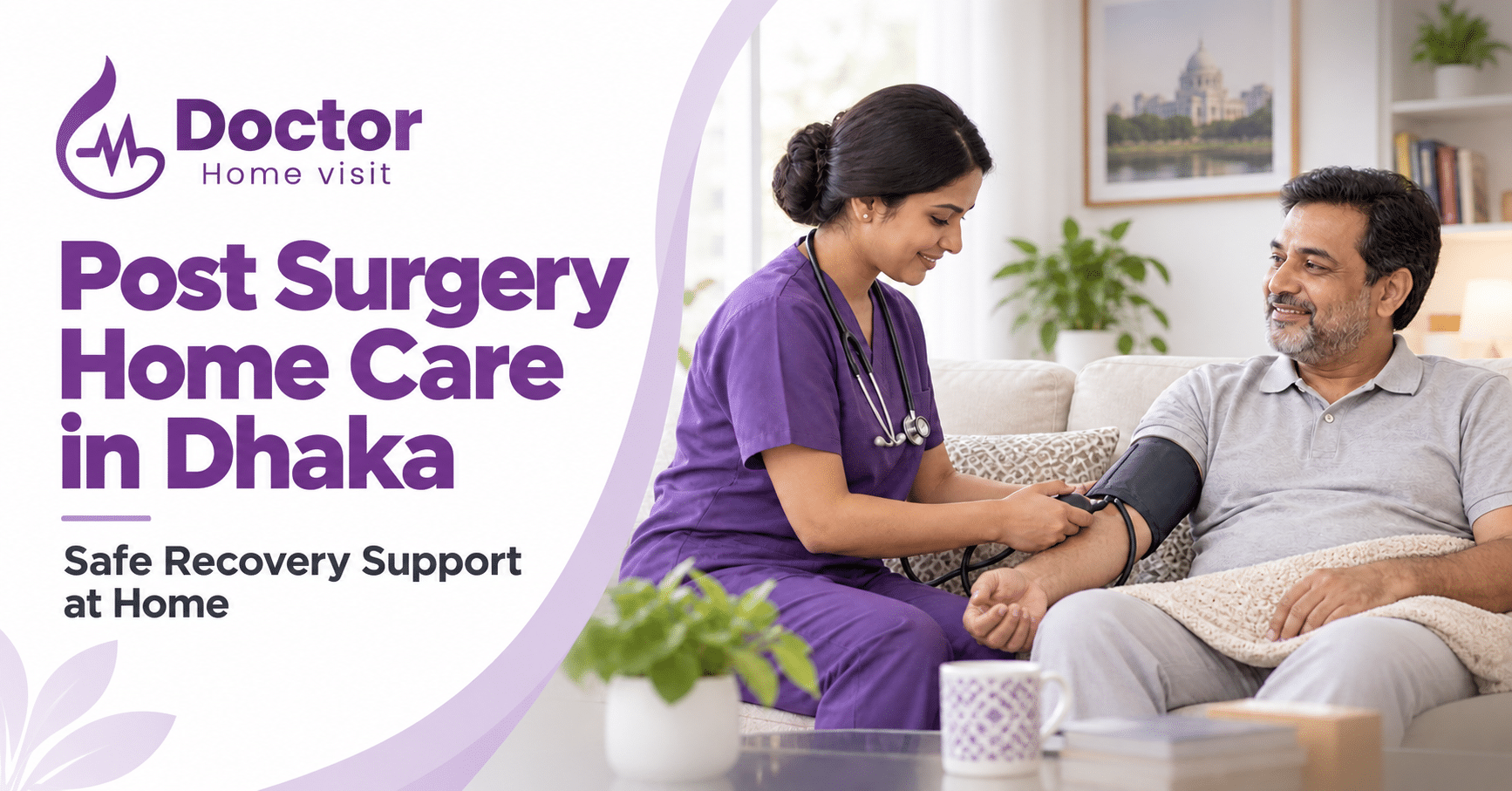
Surgery does not end when the patient leaves the hospital. In many cases, the real recovery journey starts after discharge. The patient comes home with medicines, wound dressing instructions, movement restrictions, follow-up advice, and sometimes a long list of things the family must manage carefully. That is where Post Surgery Home Care Service in Dhaka becomes extremely important.
Doctor Home Visit BD provides professional home care, nursing, health monitoring, medication support, wound care assistance, and follow-up doctor consultation for patients recovering after surgery. Whether the patient is elderly, weak, recovering from a major operation, or unable to move properly, proper post-surgery care at home can make recovery safer, smoother, and less stressful for the whole family.
What Is Post Surgery Home Care?
Post surgery home care means professional healthcare support provided at home after a patient has undergone surgery. It may include wound dressing, medicine management, pain monitoring, mobility assistance, vital sign checkup, diet guidance, nursing support, and follow-up communication with a doctor or physician.
In Dhaka, many families prefer this service because hospital visits can be tiring after surgery. Traffic, waiting time, infection risk, and patient weakness make travel difficult. With home care, the patient can recover in a familiar environment while still receiving medical attention from qualified healthcare professionals.
Understanding Recovery Support After Surgery
Recovery support after surgery is not only about taking medicine on time. It includes watching the wound, checking for infection, helping the patient move safely, managing pain, monitoring fever, and making sure the doctor’s medical instructions are followed correctly.
A patient may look stable after leaving the hospital, but small mistakes at home can slow recovery. For example, missed medicine, wrong dressing, poor hygiene, or unsafe movement may cause complications. Professional post-operative care helps reduce these risks.
Importance of Proper Post Operative Care
Proper post operative care is important because the body needs time to heal after surgery. During this period, the patient may feel pain, weakness, dizziness, fever, or difficulty moving. Some patients may also need skilled nursing care for wound dressing, injection, catheter care, or regular health monitoring.
Without proper care, a simple recovery can become complicated. Infection, bleeding, swelling, pressure sores, medicine mistakes, or delayed healing can happen. A trained nurse or caregiver can support the patient and guide the family during this sensitive time.
Why Many Patients Prefer Recovery at Home
Many patients feel more comfortable recovering at home because they are close to family, familiar surroundings, and personal routines. Home feels calmer than a hospital ward. For elderly patients and children, this comfort matters even more.
Recovery at home also reduces unnecessary hospital visits. With the right post surgery home care service, the patient can receive medical home care, nursing support, and doctor visit assistance without leaving the house unless it is truly needed.
Why Post Surgery Care Is Important
Post surgery care is important because healing is a process, not a single event. The patient needs careful support until the body becomes stable again. The first few days and weeks after surgery are often the most critical.
Families may try their best, but not everyone understands wound care, medicine schedules, infection signs, or safe movement techniques. Professional healthcare support helps the family avoid confusion and gives the patient better recovery care.
Preventing Recovery Complications
One of the main goals of post surgery home care is preventing complications. After an operation, the patient may face risks like wound infection, fever, bleeding, swelling, uncontrolled pain, breathing problems, or weakness.
A trained nurse can monitor the patient’s condition and notice warning signs early. If something looks concerning, the family can contact a doctor or arrange urgent care before the problem becomes serious.
Supporting Faster Healing
Good care supports faster healing. Clean wound dressing, proper medicine timing, balanced food, enough rest, safe movement, and regular checkup all help the body recover.
Think of recovery like repairing a house after a storm. If every step is done carefully, the repair becomes stronger. But if you ignore small cracks, bigger damage may appear later. Post-operative care works the same way.
Managing Patient Comfort and Safety
After surgery, patients often feel pain, fear, discomfort, or weakness. They may need help sitting, standing, walking, changing position, eating, or using the bathroom.
Home care support makes recovery safer and more comfortable. A nurse or patient care taker can help the patient move properly and avoid falls, pressure injuries, or unnecessary strain on the surgical area.
Types of Post Surgery Home Care Services
Post surgery home care can include different types of services based on the patient’s condition, type of surgery, and doctor’s instructions. Some patients need only short-term wound care, while others need regular nursing or long-term assistance.
Doctor Home Visit BD helps families choose suitable recovery support based on real patient needs. The goal is simple: safe healing at home with proper healthcare guidance.
Wound Care and Dressing Support
Wound care is one of the most important parts of post surgery recovery. A surgical wound must be cleaned and dressed properly to prevent infection. Wrong dressing or poor hygiene can delay healing.
A qualified nurse can provide dressing support at home, observe the wound, check for redness, swelling, discharge, bad smell, or unusual pain, and inform the family if doctor consultation is needed.
Medication Management
After surgery, patients usually receive multiple medicines. These may include pain relievers, antibiotics, gastric medicine, blood thinners, or other treatment-related medicines.
Medication management helps ensure the patient takes the right medicine at the right time. This is especially important for elderly patients, patients with chronic illnesses, and people already taking medicine for diabetes, blood pressure, heart disease, or kidney issues.
Mobility Assistance
Many patients cannot move normally after surgery. Some may need help getting out of bed, walking, sitting, or using the toilet. Moving too much can hurt the surgical area, while not moving at all can also cause problems.
A caregiver or nurse can support safe mobility. They can help the patient follow doctor instructions, avoid falls, and gradually return to normal movement.
Health Monitoring
Health monitoring includes checking temperature, blood pressure, pulse, oxygen level, pain level, wound condition, and overall patient health. Regular monitoring helps detect problems early.
For high-risk patients, elderly patients, and major operation recovery cases, monitoring is very important. It helps the family understand whether recovery is going well or medical consultation is needed.
Follow-Up Doctor Support
Follow-up doctor support helps keep recovery on track. A doctor may review the patient’s condition, check reports, adjust medicine, recommend tests, or decide whether hospital follow-up is required.
Sometimes online doctor consultation, home visit doctor support, or clinic follow-up may be needed. Doctor Home Visit BD can help families arrange the right type of medical support.
Role of Nurses in Post Surgery Recovery
Nurses play a major role in post surgery recovery. They are often the healthcare professionals who spend the most time with the patient after discharge.
A skilled nurse does more than follow instructions. They observe, support, explain, and help the patient recover with confidence. For many families in Dhaka, nursing care at home brings peace of mind.
Monitoring Patient Condition
Nurses monitor the patient’s condition closely. They check vital signs, wound status, pain level, weakness, fever, and any unusual symptoms.
This monitoring helps prevent small problems from becoming serious. If the patient’s condition changes, the nurse can alert the family and suggest doctor consultation or urgent hospital support.
Managing Medical Instructions
After discharge, hospitals usually provide instructions about medicine, dressing, food, movement, follow-up appointment, and warning signs. But many families feel confused when they return home.
A nurse helps manage these instructions properly. They can follow the discharge summary, maintain medicine timing, support dressing schedules, and guide the family on what to do and what to avoid.
Supporting Daily Recovery Activities
Daily recovery activities include eating, walking, changing position, bathing support, personal hygiene, breathing exercises, and basic movement. These may look simple, but they are important after surgery.
A nurse or caregiver can support these tasks safely. This helps the patient recover without unnecessary pain, fear, or pressure on the family.
Benefits of Recovering at Home After Surgery
Recovering at home has many benefits when proper care is available. It gives the patient comfort, privacy, and family support while reducing unnecessary hospital exposure.
However, home recovery should be planned carefully. The patient must follow doctor advice, take medicines properly, keep wounds clean, and receive professional support when needed.
Comfortable Recovery Environment
Home is usually the most comfortable place for recovery. The patient can rest in their own bed, eat familiar food, and stay close to family members.
This emotional comfort can improve recovery. When a patient feels relaxed, sleep improves, appetite improves, and the mind feels stronger.
Reduced Hospital Stay
Many patients do not need to stay in the hospital for a long time after surgery. If the condition is stable, they can continue recovery at home with nursing care and doctor follow-up.
Reduced hospital stay can lower costs and reduce exposure to hospital-acquired infections. It also allows the patient to return to a normal routine faster.
Personalized Patient Support
At home, care becomes more personal. The nurse or caregiver can focus on one patient’s needs, habits, pain level, medicine schedule, and family concerns.
This type of support is very helpful for elderly patients, major surgery patients, and people with limited mobility. Personalized care makes recovery feel less mechanical and more human.
Family Involvement in Recovery
Family involvement is one of the strongest benefits of home recovery. Family members can observe the patient, provide emotional support, and learn how to help safely.
When healthcare professionals guide the family, recovery becomes more organized. Everyone knows what to do, when to call the doctor, and which signs to watch.
Who Needs Post Surgery Home Care?
Post surgery home care is useful for many types of patients. Some need it for a few days, while others may need support for weeks or months.
The need depends on the surgery type, patient age, strength, medical history, and recovery speed. In Dhaka, this service is especially helpful for elderly patients and families who cannot manage recovery alone.
Elderly Surgery Patients
Elderly surgery patients often need extra care because old age can slow recovery. They may have diabetes, blood pressure, heart disease, joint pain, weakness, or memory problems.
For elderly patients, post surgery care at home can include nursing, caregiver service, medicine support, mobility assistance, and regular health monitoring. This helps reduce risks and keeps recovery safer.
Major Operation Recovery Patients
Patients recovering from major operations need careful observation. They may have larger wounds, stronger medicines, more pain, and higher risk of complications.
Professional home care support helps these patients follow medical instructions properly. It also helps families manage dressing, medicine, food, movement, and follow-up checkup.
Patients With Limited Mobility
Some patients cannot move freely after surgery. They may need help sitting, standing, walking, or changing position in bed.
Mobility assistance prevents falls and supports safe healing. It also helps avoid problems like pressure sores, stiffness, and weakness from staying in one position too long.
Patients Requiring Continuous Monitoring
Some patients need regular monitoring after surgery because of age, chronic illnesses, or complicated medical conditions. These patients may need frequent checkup, blood pressure monitoring, oxygen level checking, or wound observation.
Continuous monitoring helps identify warning signs early. This is especially important for patients with diabetes, heart disease, kidney disease, respiratory problems, or a history of infection.
How to Select Post Surgery Care Service in Dhaka
Choosing the right post surgery care service in Dhaka is very important. You are trusting someone with your family member’s health, comfort, and safety.
Before booking, check the provider’s experience, nursing qualification, response time, service details, and communication quality. Do not choose only based on low price.
Check Nursing Qualification
Always check whether the nurse or caregiver is trained and experienced. Wound dressing, medicine support, and post-operative monitoring require skill.
A qualified nurse understands hygiene, infection control, patient handling, and medical instructions. This reduces risk and improves care quality.
Understand Patient Requirements
Before choosing a service, understand what the patient needs. Does the patient need wound care only? Medication support? Full-time caregiver service? Physiotherapy? Doctor follow-up? Skilled nursing?
Clear understanding helps you choose the right care plan. It also prevents unnecessary costs and service mismatch.
Choose Reliable Healthcare Provider
A reliable provider should communicate clearly, explain service options, provide trained staff, and guide the family properly. Doctor Home Visit BD focuses on practical post surgery support for patients recovering at home in Dhaka.
Good service should feel professional, respectful, and responsive. In healthcare, trust matters as much as skill.
Cost of Post Surgery Home Care in Dhaka
The cost of post surgery home care in Dhaka depends on the type of care, duration, patient condition, nurse qualification, location, and required service hours. A one-time dressing service will not cost the same as 24-hour nursing care.
Families should discuss the patient’s condition before asking for exact pricing. This helps the provider recommend the right support instead of giving a random estimate.
Factors Affecting Recovery Care Cost
Several factors affect post surgery care cost. These include the type of surgery, wound condition, care duration, nurse or caregiver duty hours, travel distance, and whether the patient needs doctor consultation.
If the patient needs skilled nursing, physiotherapy, caregiver service, or regular doctor visit support, the cost may increase. But proper care can also prevent expensive complications later.
Short-Term Recovery Support
Short-term recovery support is suitable for patients who need help for a few days or weeks after surgery. This may include dressing, medicine support, monitoring, and basic mobility assistance.
Short-term care is useful after minor operations, discharge from hospital, or when the family needs temporary professional support.
Long-Term Medical Assistance
Long-term medical assistance is needed when the patient has complex health issues, limited mobility, chronic illnesses, or slow recovery. Elderly patients often need long-term support after surgery.
Long-term care may include nursing, patient care taker service, caregiver support, physiotherapy, regular checkup, and follow-up doctor consultation. A planned care package can make this more manageable.
Conclusion
Post Surgery Home Care Service in Dhaka helps patients recover safely, comfortably, and confidently after leaving the hospital. With proper wound care, nursing support, medication management, mobility assistance, health monitoring, and follow-up doctor support, recovery becomes easier for both the patient and the family.
Doctor Home Visit BD provides reliable post surgery home care support for patients who need professional medical assistance at home. If your loved one is recovering after surgery, the right home care plan can reduce stress, prevent complications, and support a smoother healing journey.
Frequently Asked Questions
Q1: How long does post surgery home care last?
Post surgery home care can last a few days, a few weeks, or longer depending on the patient’s condition and type of surgery. Minor surgery may need short-term support, while major operation recovery may need longer care.
The doctor’s advice, wound condition, pain level, mobility, and overall health decide the duration.
Q2: Can nurses provide wound care at home?
Yes, qualified nurses can provide wound care and dressing support at home. They can clean the wound, change dressing, observe infection signs, and follow hospital instructions.
If the wound shows redness, swelling, discharge, bad smell, fever, or severe pain, the nurse may advise doctor consultation.
Q3: Is home recovery safe after surgery?
Home recovery can be safe when the patient is stable and proper care is arranged. The family must follow doctor instructions and arrange nursing or caregiver support if needed.
However, if the patient has severe complications, uncontrolled pain, breathing problems, heavy bleeding, or sudden weakness, hospital care may be required.
Q4: How much does post surgery care cost?
The cost depends on service type, patient condition, duty hours, nurse qualification, location, and care duration. Wound dressing, nursing care, caregiver service, and long-term support have different charges.
To know the exact cost, contact Doctor Home Visit BD with patient details and required service information.
Q5: How can I book recovery care service?
You can book recovery care service by contacting Doctor Home Visit BD and sharing the patient’s surgery type, current condition, location, discharge advice, and required support.
The team can guide you about suitable nursing care, wound care, caregiver service, doctor consultation, or follow-up support.
Q6: Do surgery patients always need nursing care?
Not always. Some patients recover well with family support and follow-up doctor advice. But nursing care is helpful when the patient needs dressing, injection, monitoring, catheter care, or medicine management.
If the family is unsure, a doctor consultation can help decide the level of care needed.
Q7: Can elderly patients recover at home after surgery?
Yes, elderly patients can recover at home if their condition is stable and proper care is available. They may need nursing, caregiver service, mobility support, and regular health monitoring.
Because elderly patients have higher risks, professional care is often recommended.
Q8: When should a surgery patient go back to the hospital?
A patient should go back to the hospital if there is severe pain, heavy bleeding, breathing difficulty, unconsciousness, high fever, wound infection signs, sudden weakness, or worsening condition.
Do not delay urgent care if symptoms look serious.